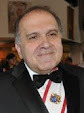
In this age of selfishness and materialism, I am grateful to God who allowed me to meet a number of great persons in the wedding of my nephew Edward with the down-to-earth Teresa Di Mascio. Teresa is very much the image of her mom who takes care of everyone around her. I always found Edward to be a caring person, but now I found many other souls who attended the wedding too. I think his upbringing in the love of God by his dear parents my twin brother Shaker and my sister in- law Marjia made a significant impression on his development as a man of great integrity. Marija too continues to inspire me for her dedication to the Church and her services to her family.
In the wedding I met many but here I will mention only a few. First: Stefania, a hero for us in accepting her long suffering and her love of the Lord. Second: Her daughter Mary, a teacher, and caring person of her mother and dad throughout their suffering and ageing. Third: Andrea, an organist at the local Church who plays as a volunteer in the Masses, an open-minded person, as well as her husband Steve who is a member of the Knights of Columbus. Steve's story is an impressive one in terms of giving to the point that he was elected Grand Knight of his Knights of Columbus Council in Acton a couple of years ago and his story was published in the State Bulletin. That evening was a gift from God; for I was introduced to some of the souls that are accepting their suffering with diseases, the careless world around them with a smile, and volunteering or rather investing their time in serving those others who are in need.
In the 4th century, St. Basil the Great, Archbishop of Constantinople, built a city for the needy and sick. He also said that as Mary the Mother of God delivered Christ to the world for the world's salvation, so too Christians must deliver Christ to the world in their commitment and services. When Blessed Pope John XXIII said that in this age the Church still bears many saints, some argued that he was too optimistic, but John XXIII went all the way in the Church's reforms through Vatican II which proved to be the greatest gift of God to his Church in the 20th century.
And back to my little world today, I dare to hope in God's mercy. It is true that Christ works through all in order to bring all to his Father. It is a matter of us accepting to work with him as he invites everyone of us to participate in his salvific work.
Monday, August 6, 2012

Sunday, July 29, 2012
A Room for God in Your Heart?
This past Friday we had another great discussion with over 30 persons in attendance. The question as an extension to the previous discussion (See http://todayquestions.blogspot.ca/2012/07/serving-each-other.html) was suggested by Nassrin “Whom are we serving when we forget God? Is it possible to serve my neighbour when I am not thinking of God? And if so how can we, each of us, make room for God in our busy daily lives?” After all, parents are both working – They hardly have time today to pay attention to their children and follow up their education. How can they dedicate time to God? Yet, we must understand that the community of Christians, based on the apostles, is more than a social secular network; for the Church is related to God who founded her.
After a brief
prayer led by Fr. Youhanna, Ivan reflected on building our relationship with
God basing his point on the two great commandments uttered by Jesus in the
Gospel: Love God with all your heart, your mind and your strength; and love
your neighbour as yourself. The two
great commandments go together so why deny God when serving our neighbour?
Blessed Mother Teresa loved everyone of the dying whom she ministered to. But
she also spent 3 hours every day kneeling and praying to Christ. Her strength
came from Christ. According to the Bible, God so loved the world that even when
he allowed Abraham’s son Isaac to be saved, he did not spare his own Son Jesus
from death on the cross so that everyone who believes in him may have eternal
life (John 3: 16).
We
asked a few participants whether they find room in their lives for God. One
person answered that he finds God in serving the Church. Another said “I have a
place dedicated to God in my home. This reminds me of spending some time with
God when I wake up in the morning. I commit myself everyday to spend time with
God and the saints.”
Fr.
Youhanna spoke of the importance that we remember God in our daily activities
and in our services. He continued “Our relationship with God starts with prayer
and meditation but does not stop there; for it continues in our prayers as a
community in the Mass and other prayers. God is a community of three persons in
one God Father, Son, and Holy Spirit. God works in us and attracts us towards
him. We frequently fall but we get up and
continue our journey. In this passing life, we have to take care to find and
remain together in Christ and his Church.
We imitate Christ for Christ is the mediator between Man and God. He who
is God came to earth and became man so that we may partake of the eternal joy
in heaven.”
Indeed,
we have a journey to go through until we see God. Blessed Mother Teresa who
died in 1997 used to spend 3 hours every day in prayer before the holy
Eucharist. Her spiritual prayers strengthened her in serving the dying people
in Calcutta. Yet in her intense love for God, for 40 years she never felt God’s
love towards her. In spite of her “dark night” she persevered trusting in God’s
abiding love.
In
the Church’s history, the Bible has been the most important source of guidance
to millions of Christians. Biblical scholars since the 2nd century
continue to explore the treasures of the Bible whose writers were inspired by
the Holy Spirit (See for example Scott Hahn online courses here http://www.salvationhistory.com/studies/courses/online). Holy persons wrote spiritual directions and instructions to
Christians. To mention only a few, St. John Climacus in the 6th
century wrote “The Ladder of Paradise” (http://saints.sqpn.com/saint-john-climacus-by-monsignor-paul-guerin/).
St. Ignatius of
Loyola who founded the order of the Society of Jesus in the 16th
century wrote “The Spiritual Exercises” for the Jesuits (his disciples) who
continue to educate Christians in the world (http://saints.sqpn.com/saint-ignatius-of-loyola/)
Although
God is present everywhere, we need to perceive his presence with gratitude.
Wednesday, July 18, 2012
The End of Civilization?
It is hard to watch today's global situation without thinking of the "End" of Civilization as we know it. One of the mortal sins is carried through the complexity of consumer-based data collected as "Big Data." To understand Big Data, you may wish to watch the interview on Big Bad Data with some technical minds: http://ww3.tvo.org/video/174232/big-bad-data They simply tell us how big businesses in the IT industry collect your data and mine from what we look for on the Internet, analyse it and use the cumulative patterns and intelligence to push more consumer products in the consumer markets. Is this not a direct slap to human dignity and what is called human privacy?
More dangerous is the advent of robots that are slowly but surely replacing human resources in manufacturing and services sectors. In the thrust for more efficient services and products in the financial sector, we know from experience how ATMs (Automated Teller Machines) replaced human tellers in the banking industry.The recent advances made in genetics and health care are now used in the industry to manufacture artificial organs that would make it cheaper and easier for transplant surgeries that are increasingly conducted by robots. Diagnosing diseases has been made much easier using scanners and other computer-based tools. More recently, as indicated by MIT economist Andrew McAfee, large corporations such as IBM and Google have already embarked on advancing the development of artificial intelligence/robots.
All of these trends threaten the human workforce and make it cheaper. The advent of computers has made life easier from a materialist perspective, but in their competition to survive, it has forced businesses to reduce their human workforce. The winners are increasingly large corporations that swallow the smaller businesses out of the market and achieve near monopoly in dictating their agenda on the rest.
With the success of American Capitalism since Nixon and Kissinger attracted the Communist USSR and China to the market policy in the 1970s, globalization became a great shaping force especially when Ronald Reagan and Margaret Thatcher pushed the West into the sphere of more conservative Capitalism. While, in the past decade, a few countries emerged stronger in economic growth - namely the BRIC (Brazil, Russia, India and China), most advanced economies have suffered from a low economic growth and higher debt. The American ideology of excessive Capitalism has led to an increase in the gap between the 1% who are rich and the 99% represented in other classes. The Middle Class in most countries is suffering from such policies that encourage excessive Capitalism at the expense of the poor.
The big picture does not look good: Europe is in a recessionary turmoil because of its euro crisis; North America is also in hard times with growth of only 2% or less; and the Middle East is in violent turmoil after the so-called "Arab Spring". Intellectuals think that the most powerful countries are probably manipulating the region to divide its inhabitants along sectarian lines and thus gain control over the region by selling more weapons and capturing the resources of the region to their materialist advantages. The case of the invasion of Iraq by the U.S. armies in 2003 is still causing insurgencies and divisions along sectarian lines which caused many Christians to flee Iraq.
The reason is probably speculative but is highly supported by evidence from the news. In my opinion, it is the last leg of the war of materialism against religion which is found simply in the legalization of immoral laws including abortion, same sex marriage, sexual promiscuity that already hit teenagers at least in North America and Europe, "free society", excessive spending and living on credit - a consumerist society that does not want to live within its means. The consequences are enormous which deserve a separate post on morality and individualism.
The existential question facing the world today is about the meaning of life: Is life about material consumption? Is there life beyond this life? Is it still possible to save ourselves from our greedy materialism? How about the next generation, our children? Will they have jobs? Will they have enough money in the economy to sustain them? Much more must be written and said.
Saturday, July 14, 2012
Serving Each Other

In this spirit we started the
meeting with a reading from the Acts of the Apostles that reflected how the
early Christians voluntarily served one another. Here it is:
“The community of believers was of one heart and
mind, and no one claimed that any of his possessions was his own, but they had
everything in common. With great power the apostles bore witness to
the resurrection of the Lord Jesus, and great favor was accorded them all. There was no needy person among them,
for those who owned property or houses would sell them, bring the proceeds of
the sale, and put them at the feet of the apostles, and they were
distributed to each according to need.” (Acts 4: 32-35)
In my introduction, I emphasized
the need of all our families to live according to the Christian mandate of love
founded on Jesus Christ our God and his apostles. We must work together and serve each
other in the community. In the economic crisis we have in the globe, it is fundamental
that each of us attempts to help the others who are out of jobs, because today's families depend on two parents working. When one of them stops working then other
social evils may occur such as divorce and the consequent loss of children. We
saw that in our discussion about marriage two weeks ago. For this reason I
developed and published a blog http://melkiteworld.blogspot.ca/
and sent it to all on my email list. The first post is about finding jobs. To those looking
for a job, please post your name, email address, city, country, and your area
of jobs as a comment on the post. See my comment there (first comment) and do
the same. If you are a business owner or senior manager in your business, have
a look at the comments. You may be able to assist the ones who are seeking
jobs in the same business line or in your company.
Then Joe Gideon spoke. He talked about the
early community of Melkite Catholics in Toronto that he and his team helped build. Only
25 families in 1965! A priest would come from Montreal to serve the community
and celebrate Mass every week. The Mass was celebrated in the Byzantine rite at
St. Michael’s Roman Catholic Cathedral. Joe himself helped many young people of
the Church find jobs. As I had said before, Joe helped me get my first job in
Toronto in 1983. He did more with others. In 1994 through the efforts of Fr.
Georges Farah and the Church Council, they raised $1.25 million to buy and own a
church building with its big parking, our current Church: Jesus the King Church.
Then in August 1994 we bought the current church building for $2 million and
added to it all the necessary works to reflect a Byzantine church as much as
possible. Joe said that he looked to soon have a Byzantine Church built in the free
area owned by the Melkite Catholic Church. His vision is to involve the young
adults in every activity that the older generation carried forward for the new projects
of the Church. That was an impressive presentation which inspired many.
Ibrahim Akleh spoke too of the Church. He
went back to the 19th century as there was a small Melkite Catholic
community in Toronto since then. The late Fr. Saba Dagher had written a short
study about the growth of this small community which should be published as we need to preserve the Christian tradition for the new generations. He said that out
of 25 families in 1965 there are today 1400 families who belong to the Melkite
Catholic Church in Toronto. We have now three priests serving and leading the
Church in two locations Jesus the King in Richmond Hill and St. Ambrose in Etobicoke:
Fr. Georges Farah, Fr. Michel Chalhoub, and Fr. Youhanna Hanna. Ibrahim has
been very active in the financial committee and in maintenance of the Church.
He is always working with his team on projects under the guidance of Fr. Farah such
as the festival of Jesus the King Church commemorating the feast of the
Transfiguration of the Lord on August 3, 4, and 5 this year.
Knowing that Joe Gideon has the gift of
singing hymns and opera music I asked him to sing for us the beautiful hymn Ave
Maria. He did perform it as a professional singer to the applause of all
present.
A few friends asked the presenters about the finances
of the parish's expansion project. Joe
asked everyone to contribute as much as they can to the project financing.
Ibrahim mentioned that some Coptic Orthodox offered up to $6 million to buy it
but their offer was turned down because the Church is our heritage. Is this a
lesson for us? The answer is to get all united under Christ.
Before closing I thanked Joe Gideon and
Ibrahim Akleh and all those who attended and pointed to the many gifts and
treasures we have in our community mentioning by name the contributions of each
of the attendees. We need to work harder to bring together these gifts for the
Church and her Lord Jesus Christ. We will be acting on projects which support young families and children; for they are the future of the Church.
We closed with a hymn of thanksgiving to
Christ played by Sonia Isho and sung by Ivan her husband and us. It was
beautiful.
I asked Fr. Michel Chalhoub to give us the
blessing and lead the closing prayer. He did it with advice to us and with much
humility.
May the Lord be blessed.
Saturday, July 7, 2012
Reforming The Catholic Church!
I have been reading the invaluable works of Henri de Lubac S.J. and the Dominican Yves Congar, both of whom contributed to writing the documents of the Second Vatican Council (1962-1965). In the 50th anniversary of the Council, it is, therefore, very opportune to recall the reform of the Catholic Church by the Council.
One of these reforms is the recognition of the Catholic Church of "Collegiality" which although not literally in the documents, constitutes a deepening of understanding and a recovery of tradition forgotten by Popes since the major schisms in the first 1000 years of Christianity. Collegiality means that governance of the Catholic Church is not as superficially understood the prerogative of the Bishop of Rome alone, but is shared by all bishops of the Catholic Church who are in communion with the Bishop of Rome. This development is enshrined in Vatican II and, properly understood, cannot be over-ridden by a statement of any of the Congregations of the Roman Curia who wish to restore the supremacy to the Holy See of Rome in every matter. I recall Gerald Cardinal Carter, the late Archbishop of Toronto, who said once that the bishop does not derive his authority from the Bishop of Rome, but from Christ in view of the Apostolic tradition. Yves Congar commented on this same doctrine of collegiality that Vatican II rebalanced the imbalance created by the unfortunate events that hastened the end of Vatican I in 1870.
More significant is the contribution of the Melkite Catholic bishops who participated in Vatican II with vigour. We recall the interventions of Maximus IV Patriarch of Antioch for the Melkite Catholics. He said that the liturgical reform of the Latin Churches spoken about in the Council has already been for centuries in the Eastern Churches. The liturgy in the Eastern Church has always been celebrated in the local language. The celebration of the Eucharist in the Eastern Churches has always been in the offering of both the body and blood of Christ together and never separated. With the reforms of Vatican II, the Western Roman Church started the movement of celebrating the Eucharist, at least on Holy Thursday, to offer both the body and blood of Christ.
In the past few years, due to sexual scandals of a few bishops and priests, some voices raised the concern that Rome should authorize the elevation of some married men to the sacramental order of priesthood if found worthy. In spite of continuing opposition from Rome to these voices, the time has come to look again at this old tradition supported by the Apostle Paul and maintained to-date in all the Eastern Churches Catholic or Orthodox. For the sake of reunion of Christians, it is about time that Rome recognizes that the 11th century Gregorian Reform which ordered a disciplinary change to create celibate priests can always be reversed if needed. The Roman Catholic Church needs many more priests than the current celibate and aging priests. In Canada, for example, Roman Catholic parishes are increasingly being served by priests from India and Africa. Moreover, the materialist way of life has been contagious to generations of Catholics who are trying to stay faithful to the Catholic tradition, yet see up to 40% of their families disintegrating due to unfaithfulness of spouses. Priests have not been immune to this phenomenon. A few of them have been unfaithful to their vows of chastity especially with children entrusted to their care. The media take every opportunity to exaggerate the percentage of unfaithful priests but Rome has instructed all the dioceses to report any child sexual abuse by priests to the civil authorities. The media, however, has already tarnished the face of Catholicism in the Western hemisphere. Although there is always a risk of the married priest giving priority to his family over his parish, this is by far less risky than finding a celibate priest engaged in inappropriate sexual relationship. Pastoral requirements demand going back to the ancient tradition. Look to the East!
Subscribe to:
Posts (Atom)