Today's Wisdom

Those who do not pass from the experience of the cross to the truth of the resurrection condemn themselves to despair! For we cannot encounter God without first crucifying our narrow notions of a god who reflects only our own understanding of omnipotence and power
Pope Francis

Tuesday, April 9, 2013

Georges Farah, Henri Boulad and Ibrahim Ibrahim: The Joy of Easter and the Renewal of Life in the Church


In the joy of Easter, the community sings “Christ is risen…He has truly risen.” Indeed, I recall Fr. Georges Farah speaking about the “sealed tomb” in which the leaders of the Romans and Jews of the time thought they could bind or choke the Word of God. Yet, he, Jesus, liberated himself and his followers from that darkness. Yes it was dark for 3 days, but Christ moves the large stone and comes out giving hope to all who are without hope.  He revisits the Apostles only to step to the doubtful Thomas and invites him to touch his wounds because he loves the man Thomas and wants him to trust that his Master is alive in spite of death. Surprised, Thomas answers “My Lord and my God!” For us, weak humans, we may easily doubt or despair when faced with injustice, violence, doubts or darkness. However, we have among us the victorious Christ who continues to encourage us and build his Church.

Lately Fr. Henri Boulad, S.J., spoke about Abraham who went in an adventure from Ur in the Chaldean land (Iraq today) all the way following the inspiration of God. By leaving everything to follow God, this giant of faith was spiritually born – a birth not attached to flesh. And God promised Abraham more offspring than the stars he could count in the sky. For Abraham, God was the "all". His offspring, billions of them in all continents today, are so many only because he went after his passion for God.  I have to leave everything for God to be born, said Fr. Boulad. And this is the grace of faith that the risen Christ -who trampled upon death - bestows on us, the Church.

After Bishop Ibrahim lectured us at Jesus the King Church, I wrote a little post on the blog which I think is appropriate for the Church to reflect on as we move together in the celebrations of Easter towards Pentecost that marks the birth of the Church. The entire reflection can be found here:

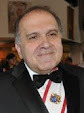
But I only wish to share what he looked like when he spoke about the Church:
Here he was teaching the flock! Everything we have is a gift from God, he resounded. “Everyone is given talents which can and should be invested to serve the other – Not only bishops or priests are called to the priesthood; for we all have a share in the priesthood of Christ” echoing the authentic teaching of the Church expounded in Vatican II. Then, in a moment of sheer greatness - the greatness of humility, he turned to the parents and to the young youth who came to hear him and said in a bold voice: It is true that the Church needs the youth, but it is also true that the youth need the Church. “Without you the Church will have no future, but remember too that without the Church you will have no future.” A silent moment went on as if I was gazing into eternity! Then Bishop Ibrahim gave the final word that every young Christian must remember and every parent must teach his children. He said “We are not a social club but the Apostolic Church that fed many generations for 2,000 years – There is absolutely no comparison between what each one of us can give and what the mother of all has given and continues to give!” 

Monday, April 8, 2013

Gerald O'Collins S.J.: Believing in the Resurrection

In 2012, the renowned Biblical scholar Gerald O'Collins, S.J. authored a book entitled "Believing in the Resurrection."

In the first section, he debunks recent ideas of some critics about the authenticity of the Resurrection of Christ. Since these are scholarly notes, I wish to summarize them here for any future questions or criticism.

Dale Allison (2005) claims that the idea of the Empty tomb depends on the burial story which is historically real. However,  the Apostles experienced the risen Christ as a mere subjective feeling of bereavement over the dead Jesus.  Resurrection has been swallowed up in psychology. Here Dale Allison denies the Divine initiative of the Resurrection, e.g. the Appearance  of Christ to the Apostles and later to over 500 disciples at same time.

Daniel Smith (2010): the Resurrection story is similar to Greco-Roman myths of Heracles, Romelus…etc. But the Greco-Roman myths refer to people who lived in a very distant past, unlike Jesus whose Resurrection is reported within decades after his death. In Mark, it is hard to find influence from Greco-Roman myths (Adela Yarbro Collins). Smith also ignores the findings of Richard Bauckham that the period between Mark and other Gospels was spanned by testimonies of eyewitnesses (Peter, Mary Magdalen, sons of Zebedee…). 

Geza Vermes (2008) replicates the ideas of his friend Paul Winter that Jesus rose only in the sense of being loved by his followers who “felt” that he was still with them in spirit. Against this interpretation of the Resurrection experience as a mere subjective feeling, O'Collins cites St. Paul in 1 Cor. 15, an early Epistle, in which Paul says “I handed on to you…what I in turn received: that Christ died for our sins in accordance with the scriptures, and that he was buried, and that he was raised…and that he appeared to Cephas [Peter] then to the twelve…”. O'Collins also notes that Vermes joins Bultmann in dismissing the 3 predictions of Jesus about his own coming death and resurrection in Mark (8:31; 9:31; 10:33-34), but in fact, the 3 predictions in Mark do not specify killing by crucifixion. This supports the widely held view today that the passion predictions in Mark are not free inventions and contain a historical kernel that Jesus anticipated his death and divine vindication through resurrection.

Philip Pullman (2010) fabricates a story from  a legend created  a century ago by Nicolas Notovitch  (1894) and Mirza Ghulam Ahmad (1899 in Urdu)  in which Jesus was taken alive from the cross (never died on the cross!), went to India and died there. Others claimed that he was taken alive from the cross and went to France where he fathered children by Mary Magdalen (Dan Brown in his book the D'Avinci Code, Elaine Pagels, and others...). Pullman now twists it to a case of deception in in the story of the empty tomb and the dialogue on the road to Emmaus. Pullman claims that Jesus had a twin called Christ!  Through a mysterious demonic “stranger” Christ leads the guard to arrest Jesus on Thursday night. After Jesus died on the cross and was buried, the “stranger” organizes several men to remove Jesus’ body and persuades Christ (the twin) to return the next morning and play the part of the risen Jesus!! Mary Magdalen meets Christ thinking he is the risen Jesus. Christ then joins the disciples on the road to Emmaus and appears to them as Jesus. The rest of the disciples are now convinced too that Jesus rose from the dead! This is the Conspiracy Theory in a new form. It fails scrutiny too since he ignores the appearances of the risen Jesus in Galilee (Matt 28: 16-20; John 21; and implied by Mark 16: 7), the appearance to Peter (1 Cor 15:5; Luke 24: 34); the appearance to more than five-hundred disciples (1 Cor 15: 7) in addition to the appearance of the risen Jesus to Paul. Pullman's story is a fiction which hardly deserves serious scholars attention.

More exploration in the book by Gerald O'Collins will show us why everyone who is seriously looking for the truth must believe in Christ and his Resurrection as testified by the continuing tradition of the Church! To be continued...

Sunday, March 31, 2013

Joseph Jules Zerey: The Joy and Life in the Resurrection of Christ


The Resurrection of Christ


Church of the Holy Sepulchre - Jerusalem

My beloved Priests, Religious brothers and sisters, and all our faithful sons and daughters:

He is risen…Christ is risen…He is truly risen…Truly, Jesus Christ, Son of the living God, has risen. Death could not keep the one who is life and life-giver…Man was created in His image as a free creature in His likeness. But Man used his freedom far away from the holy will of God. So God came in a body taken from his mother the Virgin Mary…He came to us a humble and poor person healing our illnesses…resuscitating our dead…teaching with authority…calling us to repent…merciful towards sinners…highly rebuking the hardened and prideful hearts…

However, men rejected his call to repent. Instead, they scourged him, insulted him, mocked him, and made him carry a cross in the streets of this holy city, Jerusalem, city of peace. And they crucified him, but he did not remain dead, for he rose from the dead.

From our Patriarchate which is a few meters away from the Church of the Sepulchre, we cannot stop looking upon this huge Church that contains the spot of Golgotha and the Tomb of Christ. When we see these holy places, we wonder with the angels and suffer with the Virgin Mary, the women followers of Jesus, and the Apostles as we see Christ crucified then buried in the tomb. We, then, wonder and rejoice with them as we see him the risen One from death. This is what we celebrate today. He is risen. Since that day, he has been alive and present in our midst and amongst us, indeed in us. Today, we celebrate the memorial of that miraculous, unbelievable, and, to so many, incomprehensible event. We came today to this our Church in order to celebrate his Resurrection. We celebrate his Resurrection every Sunday because Christ rose at the early dawn of Sunday. Christ rises and is alive every day and he is present every day. Every day, he gives us his love, kindness, and mercy.

Christ, the risen One from death, appears to us every day to save us, forgive us our sins, and raise us from death.  However, due to the weakness of our faith, we are not present. Christ, who is ever present, calls us by name as he called Mary Magdalene by name (John 20, 11) and, therefore, she believed in his Resurrection. As the other ointment-bearing women, she ran to the Apostles preaching his Resurrection. Christ, the risen One from death, gives us his peace as he gave it to the Apostles when he appeared to them on Mount Zion (Luke 24, 36-43). Christ, the risen One from death, accompanies us on our road in life as he accompanied the two disciples on the road to Emmaus (Luke 24, 13-35), strengthened their faith through the story of salvation as found in the Holy Scriptures, and fully opened their eyes in breaking the bread. They knew him then and went fast to the Apostles preaching to them his Resurrection. Eight days later, he appeared again to the disciples, and Jesus asked Thomas who was with them to put his finger in the spots of the nails and to put his hand in Jesus’ side so as to believe (John 20, 19-29). For our sake, he added “Blessed are those who have not seen, yet they believe.” 

What do I say of his appearance again to the Apostles at the shore of the Sea of Galilee (John 21)? And what do I say of the living Christ’s appearance to Saul, in other words Paul, on his way to Damascus in order to persecute Christians there (Cf. Acts 9, 1-9) so that his eyes were opened and he became Apostle to the Gentiles i.e. preacher to the Pagan peoples? Christ appeared also to five hundred brothers at the same time (1 Corinthians 15, 6). What do I say about the faith of Christian saints who preceded us since the early centuries, of whom thousands preferred death on crosses than denying Christ or whose bodies were burned or thrown to wild animals or whose heads were cut off by the sword? What is this faith that made those martyrs accept such suffering?! I am not talking about merely the martyrs of the early centuries but about thousands of them in our countries of the Middle East over generations, and in China, Japan, Africa, and many more countries! I mention also many of our sons and daughters that were martyred in recent times in our countries of the Middle East because of their commitment to their faith. How beautiful is this faith! How great is this faith in Christ! How great is the power that made those persons sacrifice their lives for Christ! Is it not because they saw Christ the One risen from death alive in them?

And what do I say about the many saints who have preached the living Christ? I am not talking only about those who preached in the past, but also about many in this twenty-first century: bishops, priests, monks, dedicated religious brothers and sisters, and young men and women as well as entire families – among them are those who belong to Apostolic Movements - who leave their own countries and go to preach in countries and places that do not know Christ!

Rejoice in this great and holy day, for Christ who is present among us - indeed in us – showers us with his love. In the holy Mass that we celebrate today, the priest proclaims, after the words of consecration, (in our Byzantine liturgy) “We recall the Saviour’s commandment – all what took place for our sake: His Crucifixion, Entombment, Resurrection…” This is an invitation to the celebrant priest and the faithful celebrating with him to see in this bread and in this wine the body and blood of our Lord, God and Saviour Jesus Christ who suffered, died and is risen and present before us, not as an infant as he was in the manger of Bethlehem but mystically under the form of bread and wine. The Holy Spirit then comes and descends on these gifts and on all. Then the faithful filled by the Holy Spirit proclaim with faith, love, and hope: “Our Father Who Art in heaven. Hallowed be Thy Name…”   The priest and faithful receive the holy Eucharist which, by the Holy Spirit dwelling in us, makes us one with Christ and in Him we become one with the Father. We were created to become by adoption one with God the Holy Trinity: Father, Son, and Holy Spirit. This is the true Easter resurrection. This is eternal life. This is truly the kingdom of love, joy, and peace.

And you who believe in Christ: You see this glory and feel this love, this joy, and this peace. You are not alone, but you are united with all your brethren who, like you, believe in Christ. You are one with them as Christ is one with them. This is the Church bride of Christ which includes all the faithful in Christ. Unity of her children is essential. Division among us is a scandal for us and for all. Love binds us. This love is given to all our brethren in humanity without distinction. This love we extend to our enemies as Christ invites us to in his Sermon on the Mount. This is how the first Church was founded by the descent of the Holy Spirit on the Day of Pentecost. Its place known as Mount Zion (Cenade) is not far from here in Jerusalem.

As in every year, the Church organized holy Lent to renew our faith through deep repentance so that we can see the risen Christ clearly before us; indeed in us. I hope you have lived a holy Lent and true repentance to be worthy of the forgiveness of sins. If you were unable to receive it, by all means rush through this Paschal time in order to see the risen Christ through the purification of hearts. By the grace of his Resurrection, you too may rise with him. In this year, the Year of Faith and New Evangelization, joyfully proclaim your love for Christ. This will be evident in your great love of God and of your brethren. Reconcile with those who hate you. Forgive those who trespass against you as Christ has forgiven you. Help each other generously, especially those who are in much need of your assistance including the elderly, the sick, and the poor. Joyfully, take care of your parish and in responding to all its needs including caring for its servants, maintaining and renewing its buildings, and beautifying the Church. As for the Apostolic activities, these are renewed in the joy of Easter. The living parish, through her children and Apostolic activities, encourages her children to a fuller dedication and to the development of vocations to the priesthood and monastic life.

This is Easter that we live today. Easter fills our hearts with love, happiness, joy, and peace.

O Most Holy Father, by the merits of the passions, death, and Resurrection of your Son and our Saviour Jesus Christ;
Send your Holy Spirit to renew our faith in your salvation;
Raise us from our death so that we can preach your salvation in our lives and deeds;
Have mercy on us O Lord and on your world that still does not know your free salvation;
Look upon this Holy Land which you chose to be the place of your Incarnation;
Have pity upon its suffering inhabitants who have no peace and live under much injustice, social, political, and material pressures;
Look upon the neighbouring countries that suffer because of wars, violence, hatred, terrorism, and violation of human dignity;
Transform O Lord the rocky hearts to hearts of flesh that drive all to seek reconciliation and respect of the other as prescribed in the law of human rights;
Come in with power to get all the inhabitants of our countries in the Middle East to learn to live together in the midst of different religions and in peace, love, and respect;
Yes, give us O Lord your peace; Give us O Lord peace amongst us, for we are in great need of unity and peace;
We ask you this through the intercession of our mother the Virgin Mary Our Lady of Peace.

Let me wish a happy Easter to His Holiness Pope Francis, to our beloved and zealous Patriarch His Beatitude Gregorios as well as my brethren Bishops; and in a special way the Bishops of our Greek Melkite Catholic Synod, and the Conference of Bishops of the Holy Land and to the Priests, Religious brothers and sisters. I give you my wishes and salute you all my sons and daughters in all our parishes in the Eparchy and everywhere. I salute you all with the Paschal Salutation:
“Christ is risen. He is truly risen.”

Archbishop
+ Joseph- Jules Zerey
 General Patriarchal Vicar
 for the Greek Melkite Catholics
               In Jerusalem   


Ibrahim Ibrahim: In the Darkness, a Light Shines from the Tomb!


Bishop Ibrahim Mikhail Ibrahim
By the grace of God
Eparch of Greek Melkite Catholics in Canada.
To the Priests, Deacons, Religious Brothers and Sisters
And the faithful and friends of our Eparchy blessed by God

Christ is risen. He is truly risen!

“Some also of the Epicurean and Stoic philosophers met him. And some said, ‘What would this babbler say?’ Others said, ‘He seems to be a preacher of foreign divinities’ -- because he preached Jesus and the resurrection…So Paul, standing in the middle of the Areop'agus, said: ‘Men of Athens, I perceive that in every way you are very religious. For as I passed along, and observed the objects of your worship, I found also an altar with this inscription, `To an unknown god.' What therefore you worship as unknown, this I proclaim to you.’” (Acts 17: 18, 22-23).

In a world surrounded by darkness of wars and tragedies, a light shines from a tomb which was hewn out in the rock and was supposed to contain the body of a young man in his bright youth who was tortured and crucified until death, and was buried in it. Today, after more than two thousand years, no one has been able to stop the shining light from that empty tomb. No one has ever been able to invalidate the everlasting and ever new truth that Christ died and has risen triumphant over death and all its symbols. Yes, life in the One who said that He is the way, the truth and the life, has conquered death in an everlasting and abiding victory. However, this truth does not suit those who do not believe in it, for they consider it one of myths or frauds. Some of them have collected all their power and money to fight it. Capital money spent today in the globe to feed the media against the Church is an example that shows us how much is the veiled and unveiled enmity they plot. Nevertheless, the power of the Church lays in her meekness and non-violent defence of the human dignity and the rights of the weak in peaceful ways, inspired by the treasures of the Spirit and the unceasing work of divine grace given to her. In Palm Sunday, Pope Francis invited the faithful to look into the suffering that surrounds us due to evil present in the world. We too contribute to the increase of this evil. The Pope spoke about “our personal sins: absence of love and respect of God, neighbour and the entire creation.” “On the cross, Jesus experienced the weight of all this evil, conquered it by the power of God’s love, and defeated it by his Resurrection” he continued.  “If we feel we are weak, inadequate, and powerless, we must not despair, for God does not look for powerful means as He has defeated evil by the cross” And he said “With Christ, we can change ourselves and the world. We must continue to proclaim the victory of the cross to all, and everywhere we proclaim this great love of God.”

When we speak about the Resurrection, we speak about the power of love that became a civilization of love for people in Jesus Christ. Our faith in the Resurrection of Christ introduces us to this civilization, and strengthens us to sow the culture of life in place of the culture of death. Between death and life, no other state exists. If you believe in the resurrection of Christ, you have automatically chosen the culture of life. But if you believe that death is the end of your existence, then what culture do you preach? An Atheist may answer you that he works for life as long as he lives, but once dead he will ceases to exist! They divinize the universe, from Heraclitus up to this day. They practice atheism, each in his own way; for the universe to them is nothing but a succession of accidents. To them, the universe creates itself by itself through accidents and not through creation. Nothing existed before it, and nothing will exist after it.  To them, the idea of a creator and creation is not acceptable. The universe to them is like God to us. The universe fascinates them while the Creator fascinates us. They love philosophy while we love theology. They sink in the sea of the material while we plunge in the infinite seas of the Spirit. The way they walk must change in time to indolence and idleness while faith invigorates us to walk in the ways of labour. They see no more mysteries in the cosmos! They find no more amazing things. Nothing anymore makes them wonder. As for us, we remain in wonder and amazement before the cosmos and the divine truths! Their atheism drives them to their desires and lusts. Therefore, for them, self-control of instinctive lusts and desires is deceit and ignorance. Their worst enemy is the Resurrection of Christ since it contradicts their atheism which does not believe in anything other than material things and movement. Nevertheless, in order not to be misunderstood, I am aware that judgment of believers and Atheists alike belongs to God alone; for He is the judge of everyone. I am also aware that many who claim faith are practically Atheists and they contribute to the increase of evil present in the world.

We all know that counterfeit is one of the greatest dangers in the world. Similarly, one of the greatest dangers against the Church comes from "forged" Christians, whether clerical or laymen.

Pascha or Easter, my beloved, is nothing but a new birth that saves us from atheism which is death and annihilation. Easter drives me to see reality as is, in its plainness and simplicity, to start my conversation with God as a friend to a friend, and as a son to a father. It is the end of estrangement and a qualitative transformation from aversion to attendance; from bitterness to sweetness; and the end of worry that we will cease to exist. Easter is a full existential openness towards God: I have come to be in His presence!

My prayer to God is to bless you all in this most glorious feast, in order that we all wake up from our faults and sins rising up to Him who raises us to Him; that we turn the pages of hatred, anger, vengeance, violence, and divisions; and that we open the pages of love, repentance, and forgiveness.

May Easter of this year be a Passover for the whole world, for our beloved Middle-East, and especially for the wounded Syria, towards peace, love, and the lights of the true Resurrection.

Christ is risen. He is truly risen.

+ Ibrahim M. Ibrahim
Eparch of St. Sauveur for the
Greek Melkite Catholics in Canada 

Wednesday, March 27, 2013

Karl Rahner SJ on Holiness, Death and Life

Fr. Karl Rahner, S.J. was one of the most influential theologians in the reforms of Vatican II, and possibly the greatest Catholic theologian in the 20th century. Liberals in Post-Vatican II portrayed him as their defender, yet his generally-balanced views remained admired by many conservative Catholic theologians. One of the most striking books written by Karl Rahner is a book that I am still reading. "Spiritual Exercises" was written by Karl Rahner in mid 1965, with an imprimatur by the bishop of Burlignton when books written by Catholic theologians were deemed in good standing, i.e. not containing doctrinal errors, if an imprimatur was granted. At that time Vatican II was in full swing yet Karl Rahner's notes can be given as a great example to everyone on the Spiritual Exercises of St. Ignatius Loyola, the founder of the Society of Jesus in the 16th century. Karl Rahner is not an average mind and certainly was a sophisticated yet polished person who advanced the research in the theology of salvation with his "Anonymous Christian" proposal without in anyway diminishing the responsibility and vocation, indeed the duty, of carrying out the Church's missions to non-Catholics. But, as St Augustine indicated, there are many inside the Church that are not Christians and many outside her that are more Christian than some inside her.
In the "Spiritual Exercises" by Karl Rahner, in which he is writing to those taking the Jesuit retreat, one of the most sophisticated statements to me reads: "The Other Things: By the 'other things' St. Ignatius (of Loyola) understands everything between my ego and God. They embrace many natural gifts with which I am perhaps 'actually identified,' and with which I naively try to identify myself. In this retreat, I should try to separate myself from them, and I should try to understand that I am different from them. I should realize interiorly that nothing can take the place of my pure ego, that I cannot run away from it, that I cannot relinquish my self-responsibility to the world around me. This type of separation from self is one of the main tasks of the Christian-and it takes a whole life to complete it. It is a necessary part of the road to Christian sanctity. Let us ask ourselves very concretely what these 'other things' are from which we must separate ourselves. They are not only material possessions, time, friends, but also my activity, my abilities, even my nature that has been formed by my own free decisions, health and sickness, honor and dishonor, thoughts and desires, and so forth. This process of freeing the self from the self includes everything that can be said about the ego- these all belong to the 'other things'. That which remains is the 'peak of the soul' that is, the free, self-surrendering person posited by God. This person has mastery over all other things, takes them or leaves them, orders them or forms them, and in this dealing with things finds God and itself and comes to an understanding of the relationship between God and self. Therefore, the 'other things' are not an obstacle between God and me. I cannot desire simply to eliminate them. We may not strive stoically to remove ourselves from them in such a way that we are no longer affected by them. The question here is how to use them properly and how to direct all of them to God." (pp. 19, 20).

I will stop here for now...In the above writing it is clear to me that although the Christian has to live in the world - indeed work in the world to attract it to Christ- he, nevertheless, has to separate himself from the world so that he may find holiness which is in God alone. In the Old Testament, if I remember correctly, the holy is the one set aside from the world or dedicated completely to God. It is a very fine balance, I think, that Christians need to find and walk always through prayers to Christ from the heart. We need to read again Scriptures and ask the Tradition of the Church mainly traditional writings of the Fathers including the Second Vatican Council. May the Lord help all with their sincere walks in life in order to finally attain holiness and eternal life.

Today's Quote

"Behold I make all things new." (Revelation 21:5)


Websites

See Links to Websites Below