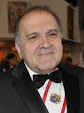
When we celebrate
Easter, we recall to memory Pope Shenouda III, the outstanding late Patriarch
of the Coptic Orthodox Church - a man who departed to God on March 17 and who
greatly influenced by his presence the pastoral work of many Christians in
Egypt and the Churches of the Middle East. His heroic contribution is far more
than mere pastoral care of the Coptic Orthodox Church or theological dialogue between the Catholic Church and the Non-Chalcedonian
(called also Old Oriental) Orthodox Churches in which he significantly
contributed. He was an energetic person who went everywhere he could go to preach and teach the Christian faith according to the early Church of Alexandria. His contribution to the welfare of his faithful included direct contact with those in authority and those who listened to him among his faithful in his weekly answers to their questions in personal, social, and theological matters. So much can be said about his commitment to the monastic life in Egypt which flourished during his pontificate, or to his enormous writings accessible by the ordinary and simple folks as also about his relationship with other Christian Churches and communions as well as the President of Egypt and other political leaders, Muslim leaders and organizations. But let me only present his contribution to the dialogue for
Christian unity.
This faithful
servant of God, as Pope Benedict XVI called him in his letter of condolences to
the Coptic Orthodox Church, initiated a new idea and presented it to other
theologians from Chalcedonian/Greek and Non-Chalcedonian Orthodox Churches as well as
theologians from the Catholic Church. The theologians meeting in Vienna in 1971 agreed to use a new language and new terms in coherently expressing the
disputed doctrine of the divinity and humanity of Christ at the Ecumenical Council
of Chalcedon where the schism between some of the above Churches took place in
451 AD partly due to using old philosophical terms that were probably misunderstood.
In 1951, on the occasion of the 15th centuries anniversary of the Council, Pope Pius
XII had expressed his conviction that there is little, if any, disagreement
between the Catholic Church and the Non-Chalcedonian Churches on the doctrine
of the two natures in Christ promulgated by the Council. With the theological
agreement in 1971, the proposed solution now had to be ratified by ecclesial
authorities in Rome and the Patriarchates of Orthodox Churches both
Chalcedonians who agree on the decisions of Chalcedon and Non-Chalcedonians who
did not accept the decisions of Chalcedon.
In 1972 Shenouda, newly elected Pope of the Coptic Orthodox Church, visited the major Chalcedonian/Greek Orthodox Churches to soothe the relations with them. While in Lebanon before the end of his ecumenical tour, he received an invitation from Pope Paul VI for a visit to the Vatican. It was in his Easter message in 1973 that Pope Shenouda III announced to his Coptic people that he accepted the invitation and gestured that Pope Paul VI would send with him a relic of St. Athanasius the Great, one of Shenouda’s great predecessors who defended the faith in the divinity of Christ in the 4th century, to its original place in Egypt. In May 1973, Pope Paul VI received Pope Shenouda III in the Vatican and together they signed a common declaration on the Incarnation of the Son of God. See the Declaration here:
In 1972 Shenouda, newly elected Pope of the Coptic Orthodox Church, visited the major Chalcedonian/Greek Orthodox Churches to soothe the relations with them. While in Lebanon before the end of his ecumenical tour, he received an invitation from Pope Paul VI for a visit to the Vatican. It was in his Easter message in 1973 that Pope Shenouda III announced to his Coptic people that he accepted the invitation and gestured that Pope Paul VI would send with him a relic of St. Athanasius the Great, one of Shenouda’s great predecessors who defended the faith in the divinity of Christ in the 4th century, to its original place in Egypt. In May 1973, Pope Paul VI received Pope Shenouda III in the Vatican and together they signed a common declaration on the Incarnation of the Son of God. See the Declaration here:
Even when our Orthodox brothers may question the "Development of Doctrine" you can see here how one of their profound theologians, Shenouda, used new expressions of the doctrine to re-present it anew according to the current thought yet he did not rescind what the Coptic Orthodox tradition believed with regard to the doctrine of the Incarnation of Christ; for he willed unity as much as he could push it and in the way he understood in his conscience. May be for him, he was restoring the recognition of the Holy See of Rome of the Coptic theological understanding. In fact the Council of Chalcedon did not condemn Dioscorus, then Patriarch of Alexandria, for any theological error but because Dioscorus dared to excommunicate the Pope of Rome before the Council! This is, in my opinion, a case of the Development of Doctrine since new expressions are used to illuminate an old doctrine. The Ecumenical Second Vatican Council had said it in 1965. It does not mean that the doctrine changes in itself but that the the Church perceives it more fully as she grows in her experience or uses new expressions that fit the culture/language she lives in.
This was a moment
of celebration in which the two sister Churches of Rome and Alexandria embraced
each other again after 15 centuries of enmity and moved wisely to re-establish full visible unity. The great Catholic ecclesiologist and
Cardinal, Yves Congar, commented about this declaration that it included the only concrete Christological dogmatic agreement between two heads of Churches. Shenouda III had the dogmatic
agreement ratified by the Coptic Orthodox Synod in 1986. Shenouda remained
committed to the reunion of the Churches. This was a wise move too by Pope Shenouda; for by accepting the invitation of Paul VI, he opened the way for more mutual understanding of theologies and, more importantly, the world heard of this Coptic Orthodox tiny Church for the first time in centuries. To his credit, he was a magnificent
contributor to the doctrinal agreements reached between the Chalcedonian and
Non-Chalcedonian Orthodox Churches in 1989. Both families of Churches found
nothing that would stand in their full reunion in terms of tradition or
doctrine. In 2000, Pope Shenouda III received Blessed Pope John Paul II in Cairo and
in the Mass celebrated by the Roman Pontiff, Pope Shenouda addressed him with
warm words about the ecumenical results achieved so far by the Catholic and
Orthodox Churches. In the same meeting Pope Shenouda referred to his warm relations with Sheikh Dr. Tantawi, the late Grand Imam of Al-Azhar which meant that the patriarch was a moderate man with a large heart for Non-Christians.
Here is the lesson
we learn from such a Christian giant. He laboured with full courage to advance
the cause of his Church and by doing that he advanced the cause of Christian unity. Pope Shenouda's concern was primarily about a local Church - the Church of Egyptians including those in the diaspora. And it seems, at least to me, that his concern for Christian unity was a defense of the Coptic Orthodox faith as truly orthodox (i.e. living in the right faith) before Catholic and Greek Orthodox authorities. In Benedict XVI, the same can be said: In theological dialogue, theologians representing the Catholic Church express (probably in new terms) the doctrines of faith of the Catholic Church in order to clear misunderstandings of the past, but there is no compromise about Catholic faith in theological dialogue with other Christian communions or Churches. This was the basis of the common declaration on the doctrine of Justification by the Catholic Church and the Lutheran World Federation in 1999 in which both sides recognized that, although there remain some differences on justification by grace, mutual condemnations with regard to this doctrine in the 16th century no longer apply today.
Now we ask ourselves, what do ordinary Christians do to help advance Christian unity? We do not have to be theologians. We do not have to build shrines and churches but at least open up to the great Eastern Tradition which very few know about; learn and dialogue with Orthodox neighbours; live a life of charity towards Christians in pain in the Middle East whether Catholic or Orthodox; help them to survive as Christians; give financially to the cause of many Christians in need there; and appreciate dialogue with moderate Muslims in the Middle East. After all, the Catholic Church gives priority to unity. Unity in Truth starts with the dialogue of love. Today, rich Catholics in the Western hemisphere have an opportunity to help their fellow Christians in the Middle East and alleviate their feelings of helplessness. In a larger context, people of good will need to help a process of permanent and just peace among all citizens of the Middle East. This is certainly not happening today as we see powers of every political and ideological stripe fighting for a larger piece of the land or at least supporting a destabilization of existing peace through armed rebellion in the name of bringing a concept of freedom and risking, in the mean time, many lives. No one can ignore the vicious attacks on Libya by American, French and British bombers to free it from one dictator in the name of supporting freedom while they were creating more tribal divisions in that country as one example. Christian unity will, on the contrary, start the process of peace in the Middle East.
Nice words from our pastors are not enough. Exhortations without real action are empty! If Orthodox Christians are still scared of the Catholic Church fearing she is there to absorb them, Catholics must reassure them that they are valued with their tradition and in the event of full unity their tradition will be fully respected. This is the role that Eastern Catholics are here to play. The Orthodox Churches are part of us since Apostolic times and an opportunity or rather a call for restoring their unity with the Catholic Church is urgent and timely. Orthodox must recognize the only international voice of Christians which is performed by the Pope, Bishop of Rome. Rome still wields the most formidable power in defense of Christians and Non-Christians with her diplomatic relations among nations and is the only sovereign country represented in Arab nations. On the other hand, bishops of the Catholic Church headed by the Bishop of Rome may well pray and work together with those of the local Orthodox Churches to ignite again the fervor for Christian unity in the faithful. As I indicated in my letter to Pope Benedict XVI last October, this year is the 50th anniversary of the start of Vatican II, and would be a great initiative for His Holiness to convoke an Ecumenical Council to which bishops of the Orthodox Churches are invited to participate together with bishops of the Catholic Church to resolve what remains of doctrinal issues and the primacy issue. This same proposal was uttered by Pope Shenouda III in 1974. He thought that differences between the Catholic Church and the Orthodox Churches would be solved within a few weeks of such an Ecumenical Council. Again we must remember history. As Blessed Pope John XXIII was the first Catholic leader to recognize the need of the Catholic Church to enter into ecumenical dialogue with the rest of Christians, so was Shenouda III the first Coptic Orthodox Patriarch to realize and actively enter from his perspective into the same dialogue.
It is in unity that we find strength as Christians. It is in unity that our Christian brothers in the Arab world can survive. The Lord has risen. Let’s imitate Him and strive to follow him as Patriarch Shenouda III did in his energetic work; for the Lord is generous in His love and He has conquered death for us!
Now we ask ourselves, what do ordinary Christians do to help advance Christian unity? We do not have to be theologians. We do not have to build shrines and churches but at least open up to the great Eastern Tradition which very few know about; learn and dialogue with Orthodox neighbours; live a life of charity towards Christians in pain in the Middle East whether Catholic or Orthodox; help them to survive as Christians; give financially to the cause of many Christians in need there; and appreciate dialogue with moderate Muslims in the Middle East. After all, the Catholic Church gives priority to unity. Unity in Truth starts with the dialogue of love. Today, rich Catholics in the Western hemisphere have an opportunity to help their fellow Christians in the Middle East and alleviate their feelings of helplessness. In a larger context, people of good will need to help a process of permanent and just peace among all citizens of the Middle East. This is certainly not happening today as we see powers of every political and ideological stripe fighting for a larger piece of the land or at least supporting a destabilization of existing peace through armed rebellion in the name of bringing a concept of freedom and risking, in the mean time, many lives. No one can ignore the vicious attacks on Libya by American, French and British bombers to free it from one dictator in the name of supporting freedom while they were creating more tribal divisions in that country as one example. Christian unity will, on the contrary, start the process of peace in the Middle East.
Nice words from our pastors are not enough. Exhortations without real action are empty! If Orthodox Christians are still scared of the Catholic Church fearing she is there to absorb them, Catholics must reassure them that they are valued with their tradition and in the event of full unity their tradition will be fully respected. This is the role that Eastern Catholics are here to play. The Orthodox Churches are part of us since Apostolic times and an opportunity or rather a call for restoring their unity with the Catholic Church is urgent and timely. Orthodox must recognize the only international voice of Christians which is performed by the Pope, Bishop of Rome. Rome still wields the most formidable power in defense of Christians and Non-Christians with her diplomatic relations among nations and is the only sovereign country represented in Arab nations. On the other hand, bishops of the Catholic Church headed by the Bishop of Rome may well pray and work together with those of the local Orthodox Churches to ignite again the fervor for Christian unity in the faithful. As I indicated in my letter to Pope Benedict XVI last October, this year is the 50th anniversary of the start of Vatican II, and would be a great initiative for His Holiness to convoke an Ecumenical Council to which bishops of the Orthodox Churches are invited to participate together with bishops of the Catholic Church to resolve what remains of doctrinal issues and the primacy issue. This same proposal was uttered by Pope Shenouda III in 1974. He thought that differences between the Catholic Church and the Orthodox Churches would be solved within a few weeks of such an Ecumenical Council. Again we must remember history. As Blessed Pope John XXIII was the first Catholic leader to recognize the need of the Catholic Church to enter into ecumenical dialogue with the rest of Christians, so was Shenouda III the first Coptic Orthodox Patriarch to realize and actively enter from his perspective into the same dialogue.
It is in unity that we find strength as Christians. It is in unity that our Christian brothers in the Arab world can survive. The Lord has risen. Let’s imitate Him and strive to follow him as Patriarch Shenouda III did in his energetic work; for the Lord is generous in His love and He has conquered death for us!