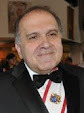
Recently I learned that Fr. Henri Boulad, S.J. has just celebrated 50 years of priesthood. What a magnificent contribution has he made in communicating and writing in quite a number of fields of knowledge and, above all, in reaching out in his missionary work to those strangers to faith, to us of little faith, and to the little ones and forgotten. His powerful sermons and retreats remind us of such passionate preachers as St. John Chrysostom and Jean-Baptiste Lacordaire.
The giants in thought and deed have been with us since time immemorial. A rough sketch of some great contributors to the development of knowledge would definitely include Confucius, Gautama Buddha, Plato, Aristotle, Solomon the author of Biblical "Wisdom", St. Paul, Origen, St. Augustine of Hippo, St. Athanasius, St. Cyril of Alexandria, St. Maximus Confessor, St. John Damascene, St. Anselm, St. Bernard, St. Gertrude, St. Albert the Great, Pascal, Descartes, Copernicus, Galileo Galilei, St. Teresa of Avila, St. Ignatius of Loyola, John Henri Newman, Charles Darwin, Teilhard de Chardin, Karl Rahner, Henri de Lubac, Pope John Paul II, Albert Einstein, Niels Bohr, Erwin Schrodinger, Werner Heisenberg, Edward Witten, Peter Higgs, Manfred Eigen, Stephen Hawking, Carl Jung, Jean Piaget, Antonio Damasio, Steven Pinker, Jaroslav Pelikan, Mircea Eliade, René Girard, Andrew McAfee, Samuel Huntington and many more.
However the rough list could not be complete without mentioning the "Angelic Doctor" Saint Thomas Aquinas. First, the volumes of thought he wrote and taught in Europe's 13th century universities are such an immense undertaking that squarely places him as an encyclopedia over his learned contemporaries. Second, Thomas was responsible for inaugurating the scientific exploration of nature based on his synthesis of Aristotle's thought with Christian thought. In his eloquent book "The Passion of the Western Mind: Understanding the Ideas that Have Shaped Our World View" Richard Tarnas recalls St. Thomas significant contribution to the development of civilizations. Third, among the great thinkers, St. Thomas is a formidable mystic too. Shortly before his death, he was praying after Mass and dared to enter his head into the tabernacle out of such abiding love for Jesus. There Thomas had a sudden vision and said afterwards that all what he wrote was a "straw" compared to what was revealed to him in the tabernacle. He stopped dictating any more work and died a humble holy person on his way to the Council of Lyons.
Beautiful minds are not only those of great philosophers or scientists, but also those imaginative minds of inspired artists, writers and musicians because they communicate the beauty of the work of God to fellow creatures. But above all, beautiful minds are those of ordinary people that in their everyday struggles they never lose hope of love...Beautiful are those that care about their families, friends, colleagues, citizens and enemies too as did Nelson Mandela in South Africa in imitation of Christ.
Thursday, December 5, 2013

Tuesday, November 26, 2013
Love Your Neighbour
In the cosmic evolution, the incarnation of Christ marks a turning point as God, in his only Son, fully enters human history. The entire cosmos is sanctified by Christ. Not only is Christ sent to the Jews, but to those considered strangers and Gentile nations. Christ reached out to the Samaritans considered enemies of the Jews and the Canaanite woman who worshiped Baal and whose child he cured (Cf. John 4; Matt. 15). The message is further manifested in Cornelius, a devout Gentile, to whom Peter announces the risen Christ (Acts 10). The power of Christianity is not in its rapid expansion but in its message of love that extends to the enemies. Christ loved his enemies to the end in spite of their evil actions in which they mocked him, spat on him, put a crown of thorns on his head, and crucified him with criminals to death (Cf. Matt 27; Luke 23; John 19). Yet, on the cross he forgave them and asked his Father to forgive them (Luke 23: 34). Today, on the path to follow Christ, Pope Francis continues his striking care for the needy, the marginalized and the poor. In his Apostolic Exhortation "Evangelii Gaudium" Francis not only calls on the rich to share their resources with the poor but urges a structural reform of dominant free-market economies. Challenging the free-market ideology, he further writes "Today everything comes under the laws of competition and survival for the fittest" and finds the reason for the current global financial crisis in "the denial of the primacy of the human person." Humans are relational. They always live together. In the early Church "There was not a needy person among [Christians], for as many as were possessors of lands or houses sold them, and brought the proceeds of what was sold and laid it at the apostles' feet; and distribution was made to each as any had need." (Acts 4). For the above reasons, we are called to love in action i.e. share of what we have and invest in the poor and persecuted. Let's focus on at least one horrible place today: Syria. It was on the road to Damascus that Saul, a Jew who persecuted the disciples of Christ, received Christ in a vision where Christ's light blinded him. He regained his sight through Ananias. All of Paul's initial preaching after his conversion - the man who will convert nations - takes place in Syria where today Christians are threatened by yet another violent war. Only think of the millions in Syria who had to escape for their lives to neighbouring countries with nothing of their belongings, or of the hundred thousand victims who fell in the war. Facing a program of islamization in the Middle East, that is supported by global powers and extremist rich Islamists, poor Christians in Syria and other countries need everything we can give. It is with this in mind that Jesus the King Council of the Knights of Columbus has just launched a project "Food for Syria" at http://foodforsyria.org where all can help real people in need. The Office of Refugees in the Archdiocese of Toronto (ORAT) has also started sponsoring refugees from Syria where more Christians can help. If we are not able by ourselves to reverse a global economic crisis, at least we can collaborate to reduce the suffering of many Christians and non-Christians.
Monday, November 4, 2013
Pope Francis: Another Alter Christus?

 The word "Alter Christus" in Latin means "Another Christ." Although all priests can each claim that he is an "Alter Christus" by virtue of his service in the Eucharistic celebration in Mass, only one person in Church history was given the title "Alter Christus." This was Francis of Assisi, the 13th century Italian holy man who in spite of his wealth rejected the glory of the world, begged and traveled to non-Christian nations in order to preach Christ, wrote poems of his love of God and all humans and showed in them respect of natural beings, was the first who carried in his body the wounds of the Crucified One (called stigmata) and, by the grace of God, founded one of the most vibrant, largest and enduring orders known as the Franciscan Friars. Francis of Assisi was inspired by the Crucified at San Damiano Church to rebuild his Church. Although Francis took it first literally and rebuilt the little church with wood, he shortly understood that Christ's call was for Francis to rebuild the ailing entire Church of God - something that Pope Innocent III understood in a vision when Francis requested approval for his Franciscan Order.
In March 2013, the first Pope to carry the name Francis was elected to succeed Benedict XVI as Roman Pontiff. On the night of his election on March 13, 2013 Pope Francis showed an extraordinary opening to people and crowds when from the balcony of St. Peter's Square he asked them to pray for him and bless him. A Jesuit theologian, Pope Francis reminds us of Jesuit theologians who have contributed significantly to the contemporary development of Biblical, theological and scientific studies in the Catholic Church: Pierre Teilhard de Chardin in research of a universe deeply connected with Christian faith and salvation in Christ; Henri de Lubac in "Ressourcemment" of the Fathers of the Church and the recognition of God's active Spirit in all humans; Karl Rahner in Transcendental Thomism and his "Anonymous Christian" proposal; Hans Urs von Balthasar in his visionary work on salvation of non-Christians; Jacques Dupuis in his work on the Church and pluralism; Avery Dulles in models of the Church; Carlo Maria Martini and Gerald O'Collins in Biblical scholarship; and George Coyne in astronomy. But how were those Jesuits to influence the thought of the younger Jesuit who became Pope Francis at the age of 76? Born Jorge Mario Bergoglio in Flores, Buenos Aires the son of an Italian family that had immigrated to Argentina, he studied then worked as a chemical technician before following his vocation to be a priest. Ordained priest in 1969, he was Argentina's Provincial superior of the Society of Jesus from 1973 to 1979. In 1998 he was appointed Archbishop of Buenos Aires, and in 2001 he was made a Cardinal by John Paul II. His humility, concern for the poor and thrust for dialogue of the Church with other faiths have been demonstrated in his own down-to-earth daily life (e.g. living in a humble apartment) and in his encouraging steps to work with the marginalized and sick in the slums. While always supporting the Church in her policy on such moral issues as legalized abortion, legalized same-sex marriage, divorce and trafficking in human beings, he nevertheless felt close to persons afflicted with them. Starting his pontificate with his desire to see a poor Church for the poor and his preference for talking to and serving ordinary people whether visiting those in prison and in hospitals, praying with handicapped, or tweeting on Twitter, he immediately attracted the youth and impressed the media when he participated in the World Youth Day held July 23-28 in Rio de Janeiro, Brazil and had a surprise long press conference on his way back to Rome. In August he was exclusively interviewed and his interview was published by some major Jesuit publications ( http://americamagazine.org/pope-interview). His theology seems close to Karl Rahner and Henri de Lubac but he is more than a theologian; for he approaches events and people as his mission. All of this could be interpreted as sentimental wishes. The real test of this pontificate lies in a number of issues that the Pope must deal with:
1. Internally. He was elected on the expectation that he will reign in and end the scandals that ravaged the Vatican in recent years especially the handling of the Vatican's finances, the so-called Vatileaks, and corruption in several clerical appointments in Rome and elsewhere that pointed to favoritism. Pope Francis immediately established a commission to look into the finances and other corruption cases. A few charges have been laid over misconduct. Of the most notable changes are the investigation of a Vatican Bank accountant, Monsignor Nunzio Scarano, for allegedly laundering money, the financial report released by the Vatican Bank that showed efforts by the Vatican to be more financially transparent, the retirement or resignation as Secretary of State of Cardinal Tarcisio Bertone, blamed for many of the gaffes of the papacy of Benedict XVI as well as the suspension in October of the German bishop Franz Peter Tebartz-Van Elst of Limburg who was spending $42 million on building his own residence. The Pope seems determined to clean up the mess he inherited and reroute the Church's finances to help the churches in need.
2. Increasing violence in the world especially the threat of Islamists to end, or significantly reduce, Christian presence in the Middle East where the first Christians lived and preached and their offspring survived in spite of persecutions for nearly two millennia. In spite of an Apostolic Exhortation by Benedict XVI in 2012 calling on Muslims and Christians to respect each other's lives, militant violence continues to harm ordinary lives. The militant Muslim Brotherhood members are still contesting the legitimacy of the new government in Egypt, burning churches and smuggling weapons through the terrorist organization Hamas. A sectarian war in Syria has ravaged many cities where Christians and Muslims have lived together for many centuries. Extremist Islamic terrorism has also been manifested recently in Mali, Kenya, Somalia, Ethiopia and the Philippines. Tunisia, Algeria and Morocco have seen despicable scenes of massacres against innocents. And Lebanon is under division since Hizbullah and other Shiite Muslims and Sunni Muslims continue to fight each other. Meanwhile the Prime Minister of Turkey, Erdogan, attempted to revive the Ottoman empire and imposed Islamic restrictions while at the same time betting to enter the European Union. At a grand scale, governments of the powerful military nations particularly the U.S. and its allies on the side of the Islamists against Russia and China on the other side continue to provide military support to their partners in the hope of expanding their own empires and markets regardless of losses of lives. One theory that emerged recently claims that the intent of the Western powers is to keep Islamic terrorism in the Middle East provided that Israel remains secure. But it misses the geopolitical visions of Russia and China. It seems that the U.S. is proceeding to contain the ascending economic power of China and Russia. In the absence of political conscience who cares about Christians or Muslims?
3. Increasing materialism in the advanced West that is breeding consumerism, and causing social injustice due to:
a) increased material possession by rich individuals causing more poverty of the masses that need welfare and education;
b) Weakened job opportunities for new generations especially because of the replacement of human workers with computer information systems and robots in most industries;
c) the emergence of the culture of instant pleasure and selfish competition among young adults and teenagers which increased bullying in schools and caused suicide in certain desperate cases;
d) Most importantly the lack of prayer life, church activities, and vocations to the priesthood.
In brief, Pope Francis has many challenges to deal with. He has already challenged excessive capitalism in his final speech in World Youth Day and made it clear that the Catholic Church will defend its moral stance for the poor in Latin America and will protect her children from fundamentalist Pentecostalists who are attempting to lure Catholics in Latin America to their exclusivist Protestant communion on promises of abundant life here on earth and eternal happiness in the next life in superficial interpretation of the Bible. He is expected to challenge Catholic cardinals and bishops that take advantage of the wealth of their parishes to enrich their own residences. He is expected to challenge Catholic charitable organizations stemming from the United States and Canada that spend much money on big investments while most Christians in Africa suffer from hunger. Other Catholic organizations and orders are expected to be purged or reformed. Christ himself said "Do not think that I have come to bring peace on earth; I have not come to bring peace, but a sword." (Matt 10: 34). Yes, the moral fight that brings everlasting peace.
Although the papacy remains essential for safeguarding the unity of the Church, Francis calls himself simply Bishop of Rome. If it is true that the supremacy of the Pontiff of Rome is the only major obstacle to the reunion between the Catholic Church and the Orthodox Churches this position may lead to reunion between them.
Satan instigates us to take sides in any conflict, but there is no escape from the fact that humans are relational by nature as God is relational. It is really wonderful that God called Francis of Assisi to love through all creation and today He calls us through Pope Francis to love through all creation (See Quantum Synthesis) . The only civilization that can last is built on understanding of human needs both spiritual and physical thus risking to ultimately embrace love. "Be moderate in everything except in love" wrote St. Augustine in the 5th century AD. Today Pope Francis is calling all to follow Christ by example as He loved us (John 13, 34).
Friday, October 18, 2013
The Development of the Idea of God in the Bible

The purpose of this lecture is to inform
Christians and non-Christians alike of the latest studies about God, the
development of the idea of God in the Bible, and the points that we can
conclude based on them. Of particular importance is bringing this knowledge to
parents, educators, and pastors who in turn can help Children learn the great
themes of the Bible as the Knights of Columbus started a few weeks ago a
bi-weekly Bible competition among teenagers at Jesus the King parish in
Toronto.
Summary for Christian parishioners
The idea of God is found in all ancient
civilizations and still alive today in different forms of spirituality.
The Biblical literature reflects the development
of the idea of God in the Hebrew tradition which is transformed in the New
Testament by Christ and his followers to reach out to all nations since the
first century AD. With Abraham a tribal local God is worshiped. Moses finds
that God is in more than one territory. Hosea speaks of God in terms of love.
In Jesus Christ, God becomes human so as to restore fallen humanity to his eternal
love (Trinity in One God). Central to Christian thought is the idea that “God
is Love” (1 John 4: 8).
The Appearance of the Idea of God:
How has the idea of God come into human
consciousness? Research in anthropology since the 19th century
brought to light a number of discoveries in ancient Greek, Egyptian, Mesopotamian,
Babylonian, Persian, Roman, Indian and Chinese cultures. Among the well known
are James Fraser, Franz Boas, Mircea Eliade, and René Girard. In those authors
and others we recognize the interaction and development of history, religion,
psychology, and culture. Probably the most influential introduction of religion
in the 21st century is Joseph Ratzinger’s “Truth and Tolerance”
published in 2004. For thousands of years, in every region and country a
polytheist, or pantheist plethora of gods were worshiped. There were gods for every material or
spiritual need; a god for rain to bring rain to farmers; a god for fertility to
bring offspring to mothers; a goddess of love that inspired reflections and
poetry, and the Sun as the source of fire and food as well as many other gods
and goddesses. The need of humans for worship has never lacked. In an interview in 2006, the Atheist
biologist Richard Dawkins admitted that religion will remain an important human
phenomenon. Since in this lecture we
wish to explore the development of the idea of God in the Bible, we will limit
the discussion to the Biblical Revelation. The encyclopedic New Jerome Biblical
Commentary edited by Raymond Brown, S.S., Joseph Fitzmyer, S.J. and Roland
Murphy, O. Carm., was republished in 1990 with contributions by 74 Biblical
scholars. In an article on the “Early
Church”, 3 of those scholars assert the idea that while Jesus preached his
kingdom in Judea, the Apostles after his Resurrection took it to the entire
known world. Their recent research shows that only after the Resurrection could
the early Christians relate Jesus’ vision for the Gentiles to a structure of
faithful under the leadership of the Apostles and their disciples who succeeded
them as bishops and priests. Hence, guided by the Spirit, there is a gradual
opening from a strictly Jewish community to an inclusive Church extending
from Jerusalem to Antioch to Rome and Alexandria as well as Greece and Asia
Minor in the first century AD.
A scientist’s perspective:
In 2000, "The God Experiment - Can Science
Prove the Existence of God?" authored by Russell Stannard was published.
The author was a professor of high-energy nuclear physics at the Open
University in London. In the book, which discusses many scientific discoveries
in relation to Christianity such as evolution and quantum physics, he delves
into the development of the idea of God starting with the question "What
is God like?" Given the assumption that God has some kind of personal
nature, an important source of information in the Judaeo/Christian tradition is
the Bible. We are assuming there to be just the one God. The Bible affirms God
as the creator and ruler of the whole world. But elsewhere, in the Old
Testament, it refers to other gods (for example the Canaanite baals). "The
God of the Israelites was jealous when his people worshiped these other gods.
God is supposed to be a God of love and mercy, but there is much in the Old
Testament about a God of wrath and vengeance. His anger could be so great as to
bring him to the verge of destroying his people. Then again, God is supposed to
be the god of all peoples - loving them equally. In that case, how are we to
account for what happened to the Egyptians? We can understand God wanting the
Israelites to be freed from slavery, but killing off the Egyptians' first-born
children and drowning their army seems somewhat extreme." This shows,
Stannard explains, why we cannot interpret the Biblical literature in a static
way, or - in most cases - literally. The Bible is not a precise scientific
account of natural phenomena. In order to transmit God's revelation the authors
of books in the Old Testament used figurative language as a literary device in
such stories as the creation story of the world and the Garden of Eden. The
use of narrative language for history in the Bible makes it possible to
transmit God’s message to nomads and settlers such as the ancient Israelites.
I should add here the question on the Biblical
story of creation as some scholars think it has elements used from ancient
Babylonian myths such as the myth known as Enuma Elish dated around the 7th
century BC where Tiamat, a demiurge of ocean water, and Abzu, a god of fresh
water, mingle together as the water on whose surface the Spirit of Yahweh
hovers. Chaos too could refer to the formless state preceding the creation of
the cosmos in ancient Greek mythology (See Genesis 1:1-3). However, the
Biblical author inspired by God seems to have included such myths to trumpet
the God of Israel over other gods. Yahweh (God) alone created the entire cosmos
from nothing (ex-nihilo) and not from pre-existing matter (Cf. Terence Nichols,
2009, The Sacred Cosmos, Wipf & Stock Publishing – Reprint Edition).
The creation story illuminates us in the importance of knowledge of
ancient cultures that Biblical scholars study along with the Biblical literary
forms such as poetry, narrative history, wisdom literature, and figurative
language as well as historical development of such cultures.
The Biblical witness can be divided into two
phases:
Phase 1: From many gods to One God
By the 19th century B.C. Abram of Ur
is transformed to Abraham (Giving him a new name indicated a mission). When
Abraham followed God out of Ur in Chaldean territories, he was told to go and
settle in the land of the Canaanites. Although TNK (pronounced Tanak short for
Torah, Nebeim, Ketubim) was not written until 1000-800 B.C. it reflects earlier
traditions: Yahwist, Elohist, Deuteronomist, and Priestly.
From the many gods Abraham and his
tribe follow the One God revealed to him. This is further illuminated in God's
call to Moses to liberate the Israelites from the slavery of the Egyptians and
their gods and to follow him in Sinai before settling in Palestine. Here God is seen not only as a tribal God limited to a certain territory
but as a God who transcends many territories, defeats other deities with power. The same is found in Elijah's call to Israelis to stop
worshiping Baal who allegedly among many gods competed with God in Northern Israel.
Elijah miraculously brings down rain after he had stopped it, and brings down
fire when he challenges priests of Baal to a competition between his God and
theirs. When the truth is revealed in the burning offering, God is again
victorious. Many other events also show the unfaithfulness of the Jews to their
covenant with God e.g. Solomon's decision to build altars for gods of the other
nations which brings captivity to Persia and Babylonia in wars of defeat and
the destruction of the Temple. This still does not exhaust God's attempts to
bring back people to worship him in truth. Prophets such as Daniel and Ezekiel
show that in the absence of the Temple, God can still be reached in the hearts.
However the power of God as the liberator of his people from slavery to other
gods gradually turns to the compassion and love of God towards Israel who in
Hosea shows that He is faithful to his people even though they have been unfaithful.
Phase 2: From One God to the Trinity in One God
According to Georges Farah “The
Trinity was revealed in the Old Testament.” Based on ancient languages of the
Hebrews, Elohim is a plural name of God. Mystical Jewish tradition known as Kabbalah
professes the Trinity. Some other scholars refer to the Genesis account where God
says “Let us make Man in our image, after our likeness” (Gen. 1: 26) which
would imply the Trinity. The visit of the Lord God to Abraham as three men
(Trinity?) is shown in Genesis 18.
The Trinity is explicitly mentioned
in Christ’s words to the Apostles “Go therefore and make disciples of all
nations baptizing them in the name of the Father and of the Son and of the Holy
Spirit.” (Matt 28: 19), but it is also found in the Pauline Epistles mostly
written in the 50s of the first century and the Johannine literature written in
near the end of the first century. The early Fathers of the Church understood
fire with which Christ would baptize as the Spirit of God. This is also the
form in which the Spirit descended on the early disciples (tongues of fire Cf.
Acts) The incarnation of the Son of God, his teachings, his outreach to the
enemies of his people in Samaria and in Canaanite land, his authority with
which he spoke and forgave sins, his passion, his forgiveness of those who
crucified him, his acceptance of death, his death and then his Resurrection
reveal the power of God's love that the apostles understood only after the
Resurrection. Following the powerful descent of the Holy Spirit, the apostles
and their companions preached the risen Christ and the good news first to the
Jews in Jerusalem then to the rest of the cities going to Antioch,
Minor Asia, Greece, Rome, and Alexandria and the rest of the world. Here
we see how the God of Israel has extended his power rooted in love over the
entire known world. The eternal self-giving love of God the Father to his
Son is returned by the Son to his Father in the binding love of their Spirit.
This eternal love is reflected in the act of creation which God continues to do
every second and in the act of redemption in which God restores creation to him
through his Son and his Holy Spirit (See Theosis, June 2013 by Henri Boulad, S.J. here). The Son reveals the Father, the Holy Spirit reveals the Son and this
same Spirit guides the Church and works in all humans to help them come back to
their Father.
Again there is a development of
understanding doctrines by the Catholic Church in history as St. Paul refers to
(2 Thess. 2:15 and 1 Cor 11: 12), St.
Athanasius of Alexandria contributed to (See Athanasius here), Blessed John
Henry Newman thought in the 19th century and the Second Vatican
Council confirmed (Dei verbum, 8) (Cf. here).
Such a uniqueness of the God of
Christianity has impressed and empowered many scientists and scholars over
centuries. In his book, the Mystery of Being, Henri Boulad, S.J. says “God does
not love us. He loves me. He loves me from conception as the only person who
exists.” Why would Augustine shout “Late
have I found you O Most beautiful…”? Teresa of Avila in the 16th
century, a great mystic and saint in the Church once fell off her ladder so she
dared to tell God “You know why you do not have many lovers? It is because you
let them suffer!” In spite of her great suffering, or probably through it, she
loved God more. The mystical experience of this God is found in many religions.
Rabia al-Adawiyya, a Muslim Sufi mystic in 8th century Iraq prayed “O
God! If I worship You for fear of hell, burn me in hell, and if I worship You in
hope of paradise, exclude me from paradise. But if I worship You for your own
sake, grudge me not your everlasting beauty” (Cf. Margaret Smith, 1928, “Rabia
The Mystic and Her Fellow Muslim Saints”, Cambridge Library Collection). Suffering
seems to be the external condition of humans who truly love. A man who truly loves a woman will suffer
greatly and must die to himself as Christ loved and died for the Church, the
bride he loves (Cf. The Epistle to Ephesians Chapter 5).
Additional Readings:
If God risks so much that He becomes man to
restore man, then He is not a calculating vengeful God. Game Theory which
economists and strategists play to achieve their goals contains the elements of
risk necessary for achievement and most of the time requires cooperation of
those in the game. Vulnerability, the
study of which brought Professor Brown in sociology a transformative experience as a mother and wife, is also a theme of the vulnerable
love that God initiated (See here). Being is opening oneself to the other. Relationality
is at the root of everything in the cosmos (Quantum physics; See here). Civilizations
could not expand without trade between nations which spells benefits if they
cooperate. Neurologists and psychologists
too have come to the conclusion that the body is well off when the mind is not stressed
and thus is able to reshape itself and accommodate the others (Cf. Norman
Doidge, 2007, “The Brain that Changes Itself…”, Penguin Books; Redford Williams,
1998, “Anger Kills – Seventeen strategies for controlling the hostility that
can harm your health, Harper.)
Let me close with my own experience of
God’s love. Why I am still alive in spite of many illnesses that should have caused
my death can be read here.
More online resources:
Catholic Resources by Felix Just, S.J. http://catholic-resources.org/St. Paul Center for Biblical Theology: http://www.salvationhistory.com/
R. Girard in First Things: http://www.firstthings.com/article/2007/10/002-are-the-gospels-mythical-11
U.S. Catholic Conference of Bishops Biblical Resources: http://www.usccb.org/bible/books-of-the-bible/
Monday, October 14, 2013
The Quantum Synthesis - An Introduction

In this post, I survey a number of human disciplines to show that the probabilities of quantum physics are at the core of every action in the cosmos. Cases in each discipline will be examined but due to space limitation only one publication will be referenced.
- Particle physics:
It has been proven that any two particles that were once together (say in an electron) and have been separated, will continue to instantly communicate information even when they are millions of miles away from each other. Amazingly they do that at a speed that exceeds the speed of light.
There is fundamentally an enduring relationship between particles that do not think like us. This is still a mystery for scientists.
They also exhibit a probabilistic nature due to the fact that a particle has a dual wave/matter character. This was found since the early 20th century. Much has been written on this by scientists but for space I will cite here one recent book: (Cf. Manfred Eigen, 2013, From Strange Simplicity to Complex Familiarity, Published by Oxford University Press.)
- Chaotic systems:
Chaos Theory is a field of study of dynamic systems that are highly sensitive to initial conditions. It has applications in meteorology, physics, engineering, and economics. The so-called butterfly effect shows how a butterfly flapping its wings in China can cause a storm in America. Although these systems are called deterministic, they nevertheless exhibit unpredictability akin to the probabilistic nature in quantum physics.
- Evolution of biological organisms:
When the Atheist biologist Richard Dawkins published his book "The Selfish Gene" in 1976, evolutionary biology had not advanced to another understanding of evolution in which genes mutate to develop more adaptive organisms to the environment and organisms collaborate in order to spread their population. Still selfishly they want to propagate their genes, they nevertheless collaborate in order to survive together an adverse condition. Many examples have been cited. Here is one: Some birds that fly in groups may be faced with a predator. Since they know of the danger, they send one of them ahead to clear their way or inform them of the predator such as an eagle. If a predator eagle is approaching, the single bird will cry at a tune that only the others in the group will recognize as a warning even if he becomes a victim of the eagle. Attempts to discredit this phenomenon have failed. But the whole picture introduces the concept of collaboration in other living species at the cost of losing life. (Cf. Russel Stannard, 2000, "The God Experiment. Can Science Prove the Existence of God?", Published by Hidden Spring).
- Recent findings in the use of collaborative information systems:
Collaboration is now globally recognized as the optimum way for streamlining processes and the efficient delivery and deployment of solutions in businesses. I developed and implemented applications in collaborative information systems such as IBM Lotus Notes and Microsoft Dynamics for nearly two decades. The Internet has facilitated the emergence of a global village and the transmission of information between centers of learning, academia, businesses, and networks of ordinary persons. Quantum computers are also based on the theory of probability but processes are executed at a very high speed. Nothing is certain. Trial and error in the development of systems is a process of probability.
(For MS Dynamics see: http://www.microsoft.com/en-us/dynamics/crm.aspx; For IBM Lotus see:
http://www-01.ibm.com/software/lotus/; For Quantum Computing see: http://oxfordquantum.org/)
- Recent findings in sociology:
Brené Brown, Professor of sociology at the University of Texas has shown and written on vulnerability which opens the individual to love and to achieve confidence that he is loved in society. (Cf. Brené Brown, 2012, "Daring Greatly: How the Courage to be Vulnerable Transforms the Way We Live, Love and Lead", Published by Gotham). See also how Brené Brown was transformed into the loving parent through her research: http://blog.ted.com/2012/03/16/being-vulnerable-about-vulnerability-qa-with-brene-brown/
- Recent findings in neuroscience:
Dr. Andrew Newberg, neuroscientist at the University of Pennsylvania, co-authored the popular book "Why God Won't Go Away: Brain Science and the Biology of Belief" based on his research in which using brain imaging techniques and devices he observed Christian nuns in deep prayer and Buddhist monks in deep meditation. His conclusions affirm the positive effect of meditation and prayer, but more to the point how these individuals achieve a sense of union with God (Cf. An interview by Robert Wright with Dr. Andrew Newberg can be seen here:
http://www.meaningoflife.tv/video.php?speaker=newberg&topic=complete or simply read the transcript at
http://www.meaningoflife.tv/transcript.php?speaker=newberg )
Dr. Antonio Damasio, professor of neuroscience at the University of Southern California wrote extensively about the role of emotions in arriving at decision making. He is well known for his somatic marker hypothesis which provides a contemporary scientific validation of the linkage between feelings and the body. Although he stops at the level of consciousness from a materialist view, his 21st century research into the effect of emotions on the body and the brain is a recognition shared by other professors such as Dr. Brian Baker at the University of Toronto who see communication, stability, anger management and love as important attributes for life (Cf. Antonio Damasio, 2005, "Decartes' Error, Emotion, Reason, and the Human Brain", Penguin Books)
- Game Theory:
Game theory is used by economists to attempt to predict/guess the most likely outcome of an economic activity. Military strategists use it to increase security in the likelihood of an attack by the opponent force. But it can be applied to everyone with a mind. Consider a man and a woman who are starting to date each other. Both go through the probabilistic nature of the question: Is he fit for me? Is she fit for me? It is gambling for a good future in marriage.
In the end, out of the above observations, I offer a little attempt at an introduction of an interdisciplinary theory that would probably contribute to the human hope for eternal life with theological and spiritual insights.
Details of the Quantum Mystery in Particle Physics:
For many years, I have studied quantum physics starting with a formal course in university before graduation in electronic engineering in 1976. Although quantum physics has been used in numerous inventions since its discovery (such as transistors in electronic devices, lasers used in CDs, quantum cryptography, quantum computers and more), no scientist claims to fully understand it nearly 90 years after the formulation of Quantum Theory. Finding the Higgs boson in the past year at CERN's Large Hadron Collider, for which Peter Higgs and Francois Englert have been awarded the 2013 Nobel Prize in physics, has opened more questions than answers for scientists to explore. The elusive Higgs boson, dubbed the "God Particle" by Leon Lederman, reveals the quantum nature of everything from matter to antimatter and energy, calculated at almost the beginning of the Big Bang. In his 1993 book "The God Particle," Leon Lederman, who is also a Nobel Laureate, asks "If the Universe is the Answer, What is the Question?" Decades earlier, two brilliant minds, Albert Einstein and Niels Bohr, debated the nature of matter only to disagree.
Quantum theory is a theory for subatomic particles that impact the universe since the Big Bang. An electron that is fired through an electronic gun has a dual character. It is both a particle and a wave. In his encyclopedic book titled "From Strange Simplicity to Complex Familiarity" and published in 2013 Professor Manfred Eigen, also a Nobel Laureate in chemistry, asks "How can something be spatially confined, like a particle, and at the same time non-confined like a wave? How can one explain the intrinsically probabilistic nature of all quantum processes which as such are deterministic?" Eigen thinks "Explanation is based on experience; therefore explaining something is to a large extent a matter of getting used to it." (P. 43). According to Bohr (and his many disciples including Paul Dirac and Wolfgang Pauli and many other 20th century scientists following the Copenhagen school), only an observer mind can measure its coordinates including location, momentum and time. Since the electron can take multiple paths at the same time, it is not in one space and its path cannot be controlled, thus uncertainty arises. This uncertainly is governed by Heisenberg's Principle of Uncertainty. In other words, nothing exists until the observing mind determines it. The deterministic universe of Isaac Newton has lost its credibility to the open probabilistic indeterminate universe of quantum physics. Manfred Eigen brings to the reader's attention Schrodinger's Equation published in 1926 that describes in mathematical elegant form the relationship between matter and wave. But more surprises were to come. In his 1935 EPR thought experiment named after him and his colleagues Podolsky, and Rosen, Einstein wanted to challenge Bohr but found that communication between particles that were once part of a photon is instant even though they are hundreds of thousands of miles away from each other. In quantum physics, if one of the particles changes its spin, the other changes its spin immediately. Einstein remained convinced till the end of his life that there must be hidden variables that contribute to this strange phenomenon. Schrodinger wrote a letter to Einstein in which he referred to the phenomenon as quantum entanglement. He was, like Einstein, puzzled that communication of information between particles at distance seemed to exceed the speed of light because it violated the upper limit of speed of any body set by Einstein's Theory of General Relativity. Yet quantum entanglement was experimentally proved by Alain Aspect and his collaborators in 1982. Subsequent experiments confirmed the validity of quantum entanglement. It is on this particular point that scientists seem to be puzzled.
Quantum Physics and Theology:
John Polkinghorne, retired professor of mathematical physics at Cambridge University, wrote, in one of his latest books: Quantum Physics and Theology in 2008, about relationship as science is attempting to discover it at the subnuclear level: “Quantum theory brought to light a remarkable form of entanglement between subatomic particles that have once interacted with each other (the so-called EPR effect), which implies that they remain effectively a single system however far they may subsequently separate spatially- a counterintuitive togetherness-in-separation that has been abundantly confirmed experimentally as a property of nature. The physical world looks more and more like a universe that would be the fitting creation of the trinitarian God, the One whose deepest reality is relational.” (Cf. John Polkinghorne, 2008, "Quantum Physics and Theology: An Unexpected Kinship" Published by Yale University Press). Dr. Stephen Barr has written extensively on the relationship of quantum physics and theology (See, for example, his article in First Things here).
The above findings support the 2 most important observations in quantum physics:
1. The probabilistic nature of particles which yields the Uncertainty Principle
2. The communication between particles at long distances (quantum entanglement)
From 2 above, everything must be in a relationship to live. In Christianity God is a relatedness or a relationship of selfless love. It is our belief that God the Father being Love (1 John 4: 8) abandons the fullness of divinity and gives all he has to his image the Son (John 10:30; Col 1: 15-19; Phil 2: 6-11 ) who in turn returns this love in the Holy Spirit who is the binding love of Father and Son (John 15). The concept that God is relatedness or relational is found not only in Holy Scriptures but also in doctors of the Church including St. Thomas Aquinas and, in our days, Joseph Ratzinger (Bishop of Rome Emeritus Pope Benedict XVI).
If this is true, then we can say that the cosmos is signed by the stamp of the Triune God of Christians.
From 1, we all live in a cosmos still in development. Certainty is achieved beyond this life when we are in the togetherness of the family of the kingdom of God. Hell is reserved to those who never loved nor dared to explore the probability of opening themselves or being vulnerable to others or accepting the vulnerability of the other that in him God lives. According to St. Paul "For now we see in a mirror dimly but then face to face" (1 Cor. 13: 12).
Subscribe to:
Posts (Atom)