Friday, July 3, 2009
Why do we need to pray?
In every religion and culture, people pray. Christians, Muslims, Jews, Hindus, Buddhists, and atheists do. You and I pray everyday even though we do not really know. Before we speak of the great prayers of holy people, let’s explore the little ones…Our own prayers.
When my son asks me for a favour, he does not say “I pray” but “Please.” When at work your colleague asks you for a service she says “please.” Your boss sends you a request for a task that must be done and still he says “please.” When some stranger lets me get off the bus ahead of her, I say “thank you” When my wife cooks a meal I like, I say “thank you” to her. Yesterday my eldest son bought me a nice shirt – I wanted to kiss him because he thought of me. Prayer does not have to be explicitly defined. It is innate in everyone from the little baby who needs the affection of his mother to the oldest living person who needs the care and love of his/her family. The little baby cannot say “please” yet his mother responds with giving him her affection and love. The same with everyone. It is not only private but also communal. When someone excels at his services whether at work, in the community, or in Church, people gather around him and praise him. They celebrate his services and give him a gift to recognize his contribution. We see all the above forms of prayer in every place. Prayer of supplication, thanksgiving, and praise. Yet this is only the beginning.
Here is the important message: Every one of us is imperfect. He/she needs the other. Psychological studies show that a person cannot live by himself alone. People have to be in communion. Some people do this more intensely than others. They reflect on what they pray. They spend time by themselves at home to meditate. They even call on God. They talk to God even if for one minute everyday. All this is done out of need. Did you know that recent scientific research was able to find the origin of language but is unable to find the origin of worship? All humans need to worship. From the stone age to this day man worships. Prayer is only a form of worship. The development of prayer over the ages included deep meditation. In Christianity, this started with the Desert Fathers in Egypt and was brought to other parts of the world by imitating the first Fathers. .St. Anthony of Egypt is believed to be the first in a tradition that spanned the entire Christian civilization for many centuries. Many orders developed out of this deep connection to God who are still serving the world in prayer, thought, and service including the Benedictines, the Franciscans, the Jesuits, the Basilians, and many more. To-date, there are many monasteries in the world. At a deep spiritual level, monks have the courage to spend months and years praying to God. Again their prayer is meant to submit to the Father their supplications for the human needs both material and spiritual, their thanksgiving for everything we receive, their praise of God for his outpouring love that in spite of our shortcomings and sinfulness he continues to provide.
The greatest miracle of all is that God loves us to the point that he came to us. He created us out of love, He became one of us and dwelt among us in Christ and he continues to dwell among us in the Holy Spirit. This is what all Christians believe. However the most enriching prayer is that of the Eucharist where the community offers thanksgiving to the Triune God. Furthermore it is the sacrificial act of God himself (who empties himself continuously in eternity by that eternal love of the Father and the Son through the Spirit). God the Son himself offers thanksgiving and sacrifice on our behalf to the Father and at the same time He is the One offered through his body and blood by the power of the Holy Spirit. In Mass, the entire Church prays the prayer of supplications, the prayer of thanksgiving and the prayer of praise. She is united to her head Christ and with him offers the gifts to the Father through the Holy Spirit. This is why we are encouraged to take the body and blood of Christ since it is really present on the altar. We need however to be careful that we receive it only when we are in the state of grace (i.e. not in the state of mortal sin). When we receive the body and blood of Christ it is there that we partake of the Divine (Theosis).
Do we need to pray? Yes we do – We already do it everyday, albeit at beginners level, but we need to recognize, and deepen it in our souls through the one who said “I am the way, and the truth, and the life; no one comes to the Father, but by me.” (John 14: 6)

Sunday, June 21, 2009
The New Elijah

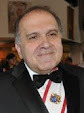
I met Archbishop Elias Chacour a couple of weeks ago in Toronto, together with a number of Melkite Catholics, the parish council, and above all Fr. Georges Farah and Fr. Michel Chalhoub. Archbishop Elias Chacour, Melkite Catholic archbishop of Galilee in Patestine/Israel was in Toronto to open a conference of the Presbyterian communion. He is frequently invited to speak to Christian denominations in the U.S. and is venerated as the voice of Eastern Christians who endured much suffering in the land of Christ at the hands of both the state of Israel and more recently the Muslim extremist government of Hamas.
Elias Michael Chacour was born in 1939 in Upper Galilee in Palestine to an Arab Christian family, members of the Melkite Greek Catholic Church. At the age of eight he was evicted along with his whole village of Biram by Zionist forces and became a deportee and a refugee but remained in the region. Because he remained in his homeland, he was granted Israeli citizenship when the state was created in 1948. Completing his schooling in Nazareth, he studied theology at St. Sulpice Seminary in Paris, returning home in 1965. He was ordained a priest by Archbishop George Hakim of Akko, Haifa, Nazareth and all Galilee, who became Patriarch Maximos V. He later studied the Hebrew Scripture at the Hebrew University. Chacour is vice president of the Sabeel Ecumenical Liberation Theology Centre. Seeing the lack of educational opportunities beyond grade 8 for his Palestinian fellows, he started his project of creating schools, that today number 10 schools, in his Mar Elias Educational Institutions. Chacour is the author of two best selling books, "Blood Brothers" and "We Belong to the Land." "Blood Brothers" covers his childhood growing up in the town of Biram, his development into a young man, and his early years as a priest in Ibillin. This book has been translated into 28 languages. His second book, "We Belong to the Land," recounts his work in the development of Mar Elias Educational Institutions, from humble beginnings to major schools for educating Palestinian young people and for helping to bring about reconciliation in a land of strife. This book has been translated into 11 languages.
Appointed by the Melkite Catholic synod to the bishopric service, Chacour currently serves as Archbishop of Akko, Haifa, Nazareth and all Galilee. His most recent educational work includes the building of a university in Ibillin. His diocese, the largest Christian in Israel, counts 76,000 faithful in 65 parishes. He speaks 11 languages, and has been twice nominated for the Nobel Prize for Peace. For years Archbishop Chacour has been invited to lecture in conferences and to "Mega church" audiences in the U.S. and Europe. His ecumenical service that started in Palestine is bearing fruits worldwide.
His message echoes that of his Master, Jesus Christ, "Be Not Afraid" uttered almost 2000 years ago in the same place where he serves now. He reminds me first of Patriarch Maximos IV Sayegh who was called "The Lion of the Council" at the Second Vatican Council in 1965. Above all, he reminds me of Elijah, the great prophet of Israel, who in the time of the great apostasy of the people of God, dared to stand alone at Carmel and call back Israel to God. This calling (in this 21st century) is as needed as ever. When today's Christianity is facing annihilation in the Middle East at the hands of fundasmentalists, both Jewish and Islamic, Christians must be encouraged to hope against hope and continue to live, albeit being persecuted, in the holy land. This is what Chacour says. But how can this "New Elijah" preach the Gospel to a hostile surrounding? Without a moment of doubt he answers "by defending peace based on justice." Is not that what Pope Benedict XVI indicated in his visit to the holy land this past May? Let us hope that this prelate of ours will succeed in his worldwide mission.
References:
For more info please refer to the many sites about Archbishop Elias Chacour using Google.
Reference used in this article:
Friday, June 12, 2009
Why we need to learn every day

Never stop learning. As long as you live, there is always an opportunity to learn. Because if you do not learn you will not be able to give back. Have an open mind like John of Damascus in the 8th century, Thomas Aquinas in the 13th century, and Karl Rahner in the 20th century. They not only brought new ideas but developed existing ideas. Have a commitment to Tradition because it carries the experience of the people of God. It is our responsibility to be open to others and to love others. This is the way of Christ. But how can we love them if we do not know them? In the ancient traditions, knowledge was not meant only for the objective intellectual mind but also for the subjective experience of my fellow people to the point that the marital sexual act was referred to as knowledge. For example, Joseph's committment to the virginity of Mary the Mother of God was referred to in the Gospel as "He did not know her." It meant he did not have sex with her (i.e. did not know her deepest experience). We know that Mary was fully in love with God that with her obedient cooperation she considered herself only a servant and He became flesh of her flesh by the power of the Holy Spirit.
Do we learn through our ideas only? No. Read again. We learn from experience more than we learn from intellectual ideas. Keep this in mind and heart.
Saturday, May 23, 2009
Accountability before the Judge of Man
 This past Friday, we watched a documentary interview with a contemporary priest, Fr. Steven Scheier, who lived an ordinary life of a priest, until he was near death in an accident. In the interview with Mother Angelica a few years ago, Scheier recounts his extraordinary story. On October 18, 1985, he was traveling from Wichita to his parish in Kansas. According to Fr. Tommy Lane, Fr. Scheier was involved in a terrible accident: a head-on collision with a pickup truck. Fr. Scheier was thrown from his vehicle. His entire scalp was cut off on the right side. He had suffered a broken neck, and the second cervical vertebra was broken. One of his parishioners who happened to be in the hospital was told he was being given a 15% chance to live. But he recovered unexpectedly and was able to return to his parish. He was saying Mass, and started reading the Gospel of Jesus' parable of the fig tree "A man had a fig tree planted in his vineyard; and he came seeking fruit on it and found none. And he said to the vinedresser, `Lo, these three years I have come seeking fruit on this fig tree, and I find none. Cut it down; why should it use up the ground?' And he answered him, `Let it alone, sir, this year also, till I dig about it and put on manure. And if it bears fruit next year, well and good; but if not, you can cut it down.'" (Luke 13: 6-9). While reading it in the Church, the page became illuminated, enlarged and came off the lectionary towards him. After Mass, Fr. Scheier remembered a conversation that had taken place shortly after the accident.
In that conversation Fr Scheier found himself standing before the judgment of Christ. He says the Lord took him through his entire life, and showed him how he had failed in his priestly service. Fr Scheier said “yes” to everything Jesus said about his life. Now before Christ he was talking to Truth and when you are talking to Truth you can’t give excuses. At the end of his judgment his sentence from Jesus was hell. Fr. Scheier said “yes” as that was the only logical thing he deserved. At that moment, however, he heard a woman say, “Son, will you please spare his life and his eternal soul?” The Lord replied, “Mother, he’s been a priest for twelve years for himself and not for me, let him reap the punishment he deserves.” “But Son,” she said, “if we give him special graces and strengths then let’s see if he bears fruit; if not, your will be done.” There was very short pause, after which Jesus said, “Mother, he’s yours.”
Fr. Scheier experienced Jesus’ mercy but Mary was the one who interceded for him.
That was the interview which reminded everyone of the truth of our lives. Our eternal life depends on how we live our present life in this world. Although we know that God is all-loving and merciful, it does not free us from responding to the calls of the Spirit of Jesus who knocks on our doors relentlessly. The experience of Fr. Scheier is particularly relevant to our way of modern life. Especially when the beast is here to swallow every faithful, who can guarantee his eternal life? We are all, very likely, the fig tree and Mary, our mother, continues to implore her unique son as the vinedresser did in the parable. How long will the Master be patient? Our three years are not forever. This was a priest who performed his regular duties as required, but he himself confessed in the interview that he thought with his mind only and not with his heart. It is a mystery how God uses all things, even near-death experiences, to save souls. We know for sure from recent scientific research that the subjective element in Man's experience, in this case near-death experience, cannot be discounted as mere illusions. Here is a possible miracle but the real miracle is surely the transformation of this brother who "was dead and now is alive" (Luke 15: 32). This is the work of God who saves. He is our hope.
References:
Sunday, May 17, 2009
Mere Christianity!
The title of this post is that of a great book written by C. S. Lewis whose conversion from atheism to Christianity brought many fruits in the 20th century. The book was published and translated into many languages, not the least Arabic. That is how I learned about it. I read it first in Arabic some 30 years ago when it was published in Cairo, Egypt. My lecture here is about mere Christianity, but unlike Lewis, it is only a few lines long.
In the Christian faith, God not only makes history and is beyond history, but also enters into it. He becomes a creature with all its limitation, even though he remains perfectly Divine with limitless power. In his humility, He was born in a manger, raised as a son of a carpenter, died on a cross as a criminal, and rose to eternal life when everyone was asleep. If Mary Magdalene did not tell his disciples, no one would have ever known! Mary herself thought he was the gardiner. The disciples traveling to Emmaus did not recognize him. A few days after his cruel death, he was walking and talking with them. When he appeared to the 10 apostles who were hiding for fear of the Jews, they first thought they were seeing a ghost! And when Thomas joined them, he also doubted that the Master was real until he touched the Master's wounds! For fourty days he spoke with them reassuring and confirming. For fourty days he showed them himself, now in his glorified body, ate with them and, before his ascension, blessed them. What transformed these fearful disciples? What made them go in the synagogues to preach and teach? What power made Stephen the first martyr utter the words "Forgive them" when the elders of the Jews were stoning him to death?
I do not think this story can be brushed off as a fiction. The "enlightened" liberal Biblical scholars of the Enlightenment down to Bultmann in the 20th century sought to "demythologize" it. But more evidence shows otherwise. No one thinker now doubts the truth of the Resurrection of Jesus of Nazareth. By all accounts, the empty tomb and the testimony of so many people, from the apostles including Paul in his early epistles to the 500 who saw Christ at once plus the many writings of early Christians are only the beginning. St. Paul himself described it in his first letter to the Corinthians written in th early 50s " But if Christ is preached as raised from the dead, how can some among you say there is no resurrection of the dead? If there is no resurrection of the dead, then neither has Christ been raised. And if Christ has not been raised, then empty is our preaching; empty, too, your faith. Then we are also false witnesses to God, because we testified against God that he raised Christ, whom he did not raise if in fact the dead are not raised. For if the dead are not raised, neither has Christ been raised, and if Christ has not been raised, your faith is vain; you are still in your sins. Then those who have fallen asleep in Christ have perished. If for this life only we have hoped in Christ, we are the most pitiable people of all. But now Christ has been raised from the dead, the firstfruits of those who have fallen asleep. For since death came through a man, the resurrection of the dead came also through a man." (1 Cor. 15: 12-21). According to contemporary Biblical scholars the firstfruits represent the portion of the harvest offered in thanksgiving to God which implies the consecration of the entire harvest to come. Christ's resurrection is not an end in itself; its finality lies in the whole harvest, ourselves.
What is the meaning of the Resurrection for us TODAY. What does Christ recall to your memory? The young adults who attended the lecture gave beautiful testimonials from their own experience. Let's just go over one. One said that when she ignored a beggar her younger sister reminded her "What would Jesus do today if he were you?" Her answer was a person who felt and experienced solidarity with the beggar. She acted on it immediately, apologized to him and gave him food. You may act differently. However following her conscience, she did act. Christ was hidden in this beggar. He was in need as surely he is in many hungry people in the world. It does not matter how many times we worship in Church or how many times we take the Eucharist as long as we fill ourselves and ignore the other. She acted - Not only prayer but also action. We do not need to be scholars to follow Christ. In the simple things we can also become saints.
Subscribe to:
Posts (Atom)