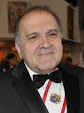
The exceptionally well-researched writings of the Dominican Yves Congar are modeled in his book: "A History of Theology" which he substantially contributed to the Dictionnaire de Théologie Catholique as early as 1939 and expanded it in 1968 after Vatican II to which his enormous contribution was described by Avery Dulles, S.J. in an obituary of Congar in the phrase "Vatican II could almost be called Congar's Council." In appreciation of their insights to the development of Catholic thought, both received the "Red Hat" by Blessed Pope John Paul II.
With a scientist precision in his "History", Congar covers Catholic Tradition and theologies of the Patristic Age, St. Augustine, the Renaissance, Humanism, St. Bonaventure, St. Thomas Aquinas, Duns Scotus, Nominalism, the Reformation & the Counter-Reformation including the contribution of St. Ignatius of Loyola & St. Francis de Sales, Rationalism and Modernism with the renewal of the 20th century movements from Neoscholastic Thomism led by M.J. Garrigou-Lagrange and Jacques Maritain to the Liturgical Movement and the "New Theology" led by Henri de Lubac, S.J. and others including Hans Urs von Balthasar and Jean Daniélou, S.J. and up to the early post-Vatican II. He makes abundant references to the theology of the "Angelic Doctor" in view of the official support that recent Popes from Leo XIII to Pius XII accorded the teaching of Thomism in Catholic seminaries and universities. In his overview, Congar shows the growth of successive specializations in Sacred Science: division of teaching in lectio and quaestio, in commentary on Sacred Scripture and dialectical disputes, growth of a positive theology and a biblical theology, specialization of a moral theology, of an ascetic or mystic theology separated from the dogmatic, creation of an apologetic, separated development of a polemic theology, as well as a pastoral theology.
Of relevance to today's conditions, Congar proposes for the theologian to live in the Church in collaboration with other believers and to refer to the teaching Church for his development of orthodox knowledge in accord with the mystical body of Christ. "Theology without doubt is a science but it is a fact that the Fathers and the greatest theologians orientated their work toward the satisfaction of the needs of the Church at a given moment. These could be the defense of the faith, spiritual needs of souls, requirements or bettering of the formation of the clergy, replies to new forms of thought or to new acquisitions of knowledge." (P. 271). On the other hand "the Church must permit or procure for the theologian the conditions of liberty which are necessary for his work." For this he quotes the axiom "In necessity, unity; otherwise liberty" (Cf. Epist. CXVIII, 32, P.L., t. XXXIII, col. 418.)
The Church draws great profit from the work of its theologians, writes Congar. He supports his view by reference to St. Augustine's statement that theology is the science by which the faith is nourished, comforted, and defended, and also has its truth in the plan of the historic life of the Church as such. "A developed state of the intelligibility of faith is practically necessary in order that the message can be communicated to minds which pose various questions in keeping with the current state of ideas and culture." Another quite significant contribution of Congar is his view on the progress of theology. "That theology progresses is quite evident since dogmatic knowledge itself progresses and, for the most part, as a result of theological work." The conditions of theology's progress can be analyzed under three aspects:
First, theology involves progress in that it is a science. It is developed in a regime of collaboration and by the dialogue of specialists in research, collections, reviews with their sections on bibliographical critique. At least in part, progress of theology is allied with progress in other sciences: historical, philological, liturgical, sociological...etc.
Then, theology involves progress in its role as the science of a specific datum. If all progress is holding to a principle, the progress of theology will consist in an understanding of its datum as found in Apostolic preaching rather than in the refinement of systematization. The Encyclical Humani Generis recognized that "The sacred disciplines always grow younger from the study of their sacred fonts, while, on the contrary, speculation which neglects further inquiry into the datum, as we know from experience, turns out sterile." (Cf. AAS, t. XLII, 1950, pp. 568-69; Denz. 3886.). Hence the law, which is that of all progress, is valid for theology in a more rigorous fashion since there is veritable progress and productive renewal only in tradition. Progress and newness in theology do not consist in change affecting the principles or datum but primarily in a richer or more precise awareness of this datum itself.
Third, theology is a reflection on the datum. Hence it profits greatly from everything that stimulates reflection, namely philosophy that encourages inquiry. The dogma can be seen in a new light, their content can be viewed more profoundly either by a new elaboration of the concepts which they involve or by starting from a new viewpoint set up by philosophy. So today even the dogma of the Trinity, Christology, the Sacraments, the Eucharistic Presence, and the act of Faith, profit from contemporary philosophical reflection on man and the existential experience of man.(See pages 271-272).
Indeed a great overview of the development of theology by a great Catholic and ecumenical scholar.
Thursday, May 30, 2013

Wednesday, May 22, 2013
Catholicism Again by Henri de Lubac, S.J.
I went again to Henri de Lubac's book titled "Catholicism, A Study of Dogma in Relation to the Corporate Destiny of Mankind" which he wrote and was already in fourth edition by 1947. It was translated to English by Langelot G. Sheppard and published by William Glowes and Sons Limited in 1950 in Britain. The book has an imprimatur attached to it and authorizing its publication as found not contrary to the doctrine of the Catholic Church as was the norm for writings by Catholic priest and theologians prior to Vatican II.
The great Jesuit theologian is immensely knowledgeable of the Patristic Fathers and Medieval Scholastic theologians. He writes with an open mind well before Blessed Pope John XXIII asked him to participate in the works of the Second Vatican Council. He was made a cardinal by Blessed John Paul II on account for his immeasurable contribution to the reforms of Vatican II while being always cognizant of the great tradition of the Church since early times.
In the book, Henri de Lubac, S.J. provides extracts from the Fathers, Doctors and other scholars of the Church such as Gregory of Nyssa, St. Augustine, Origen, St. Ignatius of Antioch, St. Gregory Nazianzen, St. Leo the Great, St. Hilary, and astonishingly, Severus of Antioch of the Jacobites. Some of these writers were excommunicated by Ecumenical Councils, yet Henri de Lubac finds it necessary to retrieve their wisdom which remains part of the Church's tradition. Henri de Lubac continues with other more recent writers and mystics not the least St. Bernard, Nicholas of Cusa, Julian of Norwich, Paul Claudel, Pierre Teilhard de Chardin, and John Henry Newman (declared Blessed in 2010).
Henri de Lubac's point is that the Catholic Church is indeed larger than the official Catholic Church, because to her are linked all the people of good will who died in the grace of God. Many of them were not baptized and did not even hear about Christ, yet by searching to live the truth following their conscience and according to the means they had available in their time and culture, they cooperated with the saving gift of God. They lived the love of God and knew Christ by their implicit desire for the truth.
How do we Christians fare today in this scale? Do we live the Gospel of Christ according to his will? Do we help the dying, the needy and poor as Pope Francis is inviting the whole Church to get out and reach out to all as Christ did? Hard questions...
The great Jesuit theologian is immensely knowledgeable of the Patristic Fathers and Medieval Scholastic theologians. He writes with an open mind well before Blessed Pope John XXIII asked him to participate in the works of the Second Vatican Council. He was made a cardinal by Blessed John Paul II on account for his immeasurable contribution to the reforms of Vatican II while being always cognizant of the great tradition of the Church since early times.
In the book, Henri de Lubac, S.J. provides extracts from the Fathers, Doctors and other scholars of the Church such as Gregory of Nyssa, St. Augustine, Origen, St. Ignatius of Antioch, St. Gregory Nazianzen, St. Leo the Great, St. Hilary, and astonishingly, Severus of Antioch of the Jacobites. Some of these writers were excommunicated by Ecumenical Councils, yet Henri de Lubac finds it necessary to retrieve their wisdom which remains part of the Church's tradition. Henri de Lubac continues with other more recent writers and mystics not the least St. Bernard, Nicholas of Cusa, Julian of Norwich, Paul Claudel, Pierre Teilhard de Chardin, and John Henry Newman (declared Blessed in 2010).
Henri de Lubac's point is that the Catholic Church is indeed larger than the official Catholic Church, because to her are linked all the people of good will who died in the grace of God. Many of them were not baptized and did not even hear about Christ, yet by searching to live the truth following their conscience and according to the means they had available in their time and culture, they cooperated with the saving gift of God. They lived the love of God and knew Christ by their implicit desire for the truth.
How do we Christians fare today in this scale? Do we live the Gospel of Christ according to his will? Do we help the dying, the needy and poor as Pope Francis is inviting the whole Church to get out and reach out to all as Christ did? Hard questions...
Tuesday, May 21, 2013
Will Computers Determine the Future of Humanity?
As fascinating as they seem, computer machines are increasingly taking over our lives. From web-based social networks to GPS systems and search engines, it is clear that we as humans are dependent on computers. For example, Google has now developed a driver-less car
- See http://www.youtube.com/
- See http://www.youtube.com/
And we continue to play games on the web and buy software that we think will help us in our day-to-day spending. Yet the big computer firms are competing to bring forward and sell the new artificial intelligence and big data analytics to other big firms. Of course, the benefits of new technology will go to the big guys who by the same technology can enslave the rest of the world. Furthermore, if and when machines take over work, the value of humans will drop...See too the latest in MIT's Andrew McAfee research on unemployment caused by technology:
Thursday, May 16, 2013
Truth and Tolerance by Joseph Ratzinger
Truth and Tolerance (2003) by Joseph Ratzinger remains one of the most sophisticated and elaborate works of this giant theologian. This book in particular must be read again by philosophers of religion and made an optional-read for students in theological learning.
Ratzinger takes the reader for a tour of the major religions and cultural trends of the world and critiques most of them especially esoteric mysticism from the Far East, the new phenomena represented by the New Age movement, Marxist Liberation Theology, historical Biblical criticism as never sufficient for properly interpreting Scriptures and contemporary science that does not recognize truth beyond matter.
Ratzinger focuses his critique on relativism connected with the Enlightenment and makes the case for Reason as the rational source of knowledge. Aside from his remarks on Plato and Aristotle, I found his defense of Christianity from Abraham on to Jesus Christ and throughout the early Church to be in the same vein as that of the development of doctrine in that the concept of God has slowly been revealed and perceived throughout history particularly with the Israelites. Ratzinger also recognizes the Greek thought which St. Paul used to advance the Christian good news and, in spite of opposition by Platonist philosophers, the Church was able to baptize many barbarians and continues to speak the truth today.
The most significant contribution of Ratzinger is definitely his moderate stance that the Catholic Church does not share the Protestant view expounded by Karl Barth that salvation is exclusive to Christians, nor is it indifferent to accept all religions or sects as equal sources of the truth that lead to salvation as the pluralistic view of Paul Knitter. The Catholic Church is inclusive, a point developed by Karl Rahner in his "Anonymous Christians" theology. She maintains that she alone has the fullness of the truth as developed in tradition.
Ratzinger takes the reader for a tour of the major religions and cultural trends of the world and critiques most of them especially esoteric mysticism from the Far East, the new phenomena represented by the New Age movement, Marxist Liberation Theology, historical Biblical criticism as never sufficient for properly interpreting Scriptures and contemporary science that does not recognize truth beyond matter.
Ratzinger focuses his critique on relativism connected with the Enlightenment and makes the case for Reason as the rational source of knowledge. Aside from his remarks on Plato and Aristotle, I found his defense of Christianity from Abraham on to Jesus Christ and throughout the early Church to be in the same vein as that of the development of doctrine in that the concept of God has slowly been revealed and perceived throughout history particularly with the Israelites. Ratzinger also recognizes the Greek thought which St. Paul used to advance the Christian good news and, in spite of opposition by Platonist philosophers, the Church was able to baptize many barbarians and continues to speak the truth today.
The most significant contribution of Ratzinger is definitely his moderate stance that the Catholic Church does not share the Protestant view expounded by Karl Barth that salvation is exclusive to Christians, nor is it indifferent to accept all religions or sects as equal sources of the truth that lead to salvation as the pluralistic view of Paul Knitter. The Catholic Church is inclusive, a point developed by Karl Rahner in his "Anonymous Christians" theology. She maintains that she alone has the fullness of the truth as developed in tradition.
Saturday, May 4, 2013
Georges Farah on the Man Born Blind
Before speaking about the man born blind, which is recounted in the Gospel reading this Sunday (John Chapter 9) at the Melkite Catholic Church, last night the charismatic pastor at Jesus the King parish introduced the idea of the celebration of joy from Easter to Pentecost, a seven-weeks period in which the Church never stops singing "Christ is risen!" Georges Farah contrasts this period with the period of Lent in which the Church lives the sufferings, passion, crucifixion and death of Christ. Although people spend much of their lives in suffering, they, nevertheless, are moved by joy and happiness - even if for one day - much more than by their stories of suffering. Everyone wants to live in joy! The example can be found in the emergence of the little baby from his mother's womb. The hour of joy that follows the delivery of the baby has an intense participatory effect on the rest of the family and the community. In spite of her 9-months of pains and groaning, the mother's first look at her baby is full of joy and this joy is contagious. The reading speaks of a man blind from his birth who encountered Jesus and was healed by him. So much is there to learn from this encounter and what follows. Please open your Bible and slowly read chapter 9 from the Gospel according to St. John before you continue reading this little post.
Let's dive in the deep with Fr. Georges Farah...First, the man was born blind. Blindness means literally the inability to see but it also means the inability to recognize or perceive what is around me. Animals in general are born with little sense of recognition. The very young sheep follow their mothers in the herd wherever they go so that they do not get lost. On the contrary, human babies do not recognize their mothers - The little baby gets attached to the woman who feeds him. Surrogate mothers may be able to provide the function of feeding babies, yet the care of the mother for her baby is more than providing food. Parents must nourish their children not to be fearful, not to stay in the "cave of Plato" but to listen to their parents and the Church. You need to listen and slowly work out the discernment of what is good and what is evil through guidance by those wise men of experience in the Church community. Blindness is found in ancient Greek writings such as Sophocles' legend of Oedipus who, after learning that he had killed his father and married his own mother, decided to blind himself. While I am still in the darkness, I must first listen and slowly feel my way out of the cave, for if the light is too bright I may be scared and go back to my comfort zone. Guided togetherness is important in stepping out from my darkness to the light.
Second, How did Jesus heal the man born blind? If you read Genesis, you notice that God formed man from the clay of the ground and breathed life in him (Gen 2: 7). In a similar way, Jesus spat in the ground and made clay of the spittle and anointed the man's eyes with the clay. In a way, this was a spiritual birth for the man - the second birth. This is why in the Sacrament of Baptism, considered the second birth by the Church, the priest who baptizes the baby makes a little spittle mixed with water and signs the child with it on his forehead, his chest and his feet. The power of the Holy Spirit infuses life of the Spirit in the child.
Third [And his disciples asked him, "Rabbi, who sinned, this man or his parents, that he was born blind?" Jesus answered, "It was not that this man sinned, or his parents, but that the works of God might be made manifest in him."] Jesus corrects deep feelings and misunderstandings about God. The Jews thought, as we also do when we have a catastrophe, that suffering or sickness is the lot of those who anger God! We pay for our sins. But that is not the God that Jesus preaches. This is not the father who looks out for his lost son (Luke 15).
Fourth, it was a sabbath day when Jesus made the clay and opened his eyes. The Pharisees again asked him how he had received his sight. And he said to them, "He put clay on my eyes, and I washed, and I see."
Some of the Pharisees said, "This man is not from God, for he does not keep the sabbath." But others said, "How can a man who is a sinner do such signs?" There was a division among them. They asked him again. The man answered, "Why, this is a marvel! You do not know where he comes from, and yet he opened my eyes. We know that God does not listen to sinners, but if any one is a worshiper of God and does his will, God listens to him. Never since the world began has it been heard that any one opened the eyes of a man born blind. If this man were not from God, he could do nothing." The man whose eyes were opened understood by common sense that this was the work of God. He did not need to be a theologian but only follow what he sees and senses. This man made an adventure by opposing the authorities of his time in spite of being condemned by them because he was then sent as a missionary for Christ.
Let's dive in the deep with Fr. Georges Farah...First, the man was born blind. Blindness means literally the inability to see but it also means the inability to recognize or perceive what is around me. Animals in general are born with little sense of recognition. The very young sheep follow their mothers in the herd wherever they go so that they do not get lost. On the contrary, human babies do not recognize their mothers - The little baby gets attached to the woman who feeds him. Surrogate mothers may be able to provide the function of feeding babies, yet the care of the mother for her baby is more than providing food. Parents must nourish their children not to be fearful, not to stay in the "cave of Plato" but to listen to their parents and the Church. You need to listen and slowly work out the discernment of what is good and what is evil through guidance by those wise men of experience in the Church community. Blindness is found in ancient Greek writings such as Sophocles' legend of Oedipus who, after learning that he had killed his father and married his own mother, decided to blind himself. While I am still in the darkness, I must first listen and slowly feel my way out of the cave, for if the light is too bright I may be scared and go back to my comfort zone. Guided togetherness is important in stepping out from my darkness to the light.
Second, How did Jesus heal the man born blind? If you read Genesis, you notice that God formed man from the clay of the ground and breathed life in him (Gen 2: 7). In a similar way, Jesus spat in the ground and made clay of the spittle and anointed the man's eyes with the clay. In a way, this was a spiritual birth for the man - the second birth. This is why in the Sacrament of Baptism, considered the second birth by the Church, the priest who baptizes the baby makes a little spittle mixed with water and signs the child with it on his forehead, his chest and his feet. The power of the Holy Spirit infuses life of the Spirit in the child.
Third [And his disciples asked him, "Rabbi, who sinned, this man or his parents, that he was born blind?" Jesus answered, "It was not that this man sinned, or his parents, but that the works of God might be made manifest in him."] Jesus corrects deep feelings and misunderstandings about God. The Jews thought, as we also do when we have a catastrophe, that suffering or sickness is the lot of those who anger God! We pay for our sins. But that is not the God that Jesus preaches. This is not the father who looks out for his lost son (Luke 15).
Fourth, it was a sabbath day when Jesus made the clay and opened his eyes. The Pharisees again asked him how he had received his sight. And he said to them, "He put clay on my eyes, and I washed, and I see."
Some of the Pharisees said, "This man is not from God, for he does not keep the sabbath." But others said, "How can a man who is a sinner do such signs?" There was a division among them. They asked him again. The man answered, "Why, this is a marvel! You do not know where he comes from, and yet he opened my eyes. We know that God does not listen to sinners, but if any one is a worshiper of God and does his will, God listens to him. Never since the world began has it been heard that any one opened the eyes of a man born blind. If this man were not from God, he could do nothing." The man whose eyes were opened understood by common sense that this was the work of God. He did not need to be a theologian but only follow what he sees and senses. This man made an adventure by opposing the authorities of his time in spite of being condemned by them because he was then sent as a missionary for Christ.
This is the important lesson today: We are sent by Christ as he sent his disciples. For the truth, he stood and they too followed him. Will we stand for the truth?
Subscribe to:
Posts (Atom)