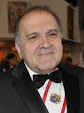
This past Sunday March 23, 2014 we watched a beautiful concert at Jesus the King Church in Toronto, performed by brilliant musicians from Lithuania and choir members of Jesus the King choirs. How could Fr. Georges Farah get the organizers and participants to spend so much time in preparation is another story. The concert included works by Johann Sebastian Bach and Wolfgang Amadeus Mozart as well as less well-known composers, but significantly enough Fr. Farah sang the Byzantine Christian glorious hymn to the Blessed Virgin Mary "Axion Estin" in such a wonderful Greek melody. It was appropriate since the Church was starting its celebration of the Feast of the Annunciation. Listen to one choir singing it here.
This was an opportunity for an encounter and collaboration (through music) between Eastern Christianity and Western Christianity. What more beautiful hymn can the choir sing other than Mozart's Ave verum which they did on that afternoon. Listen to one choir singing it here.
And if the beauty of Corpus Christi is such a foretaste of heaven, what would be the real heaven? I can only refer the reader to the article titled Why the Beloved is Beautiful which lifts us with the words of St. Gertrude the Great when Christ spoke to her soul - Thus she wrote "Then I understood the meaning contained in those sweet and ineffable words: 'God will be all in all' (1 Cor. 15:28); and my soul, which was enriched by the presence of my Beloved, soon knew, by its transports of joy, that it possessed the presence of her Spouse. Then she received these words with exceeding avidity which were presented as a delicious beverage to satisfy the ardor of its thirst: 'As I am the figure of the substance of God, My Father, in His Divinity, so also you shall be the figure of My substance in My Humanity, receiving in your deified soul the infusion of My Divinity, as the air receives the brightness of the solar rays, that these rays may penetrate you so intimately as to prepare you for the closest union with Me'."
Is not this a sign of the call today to Christians for their mission and unity?
Get our children to learn and enjoy the everlasting angelic hymns. Give our kids hope in the mercy of God. Help them realize the wonders of a loving Father...
As if I was dreaming of Christian unity, I woke up to the reality of divided Christendom over a piece of land. I was reminded by the conflict in Ukraine between the Christian West and the Christian East. What a waste of resources! What a waste of talents! Why Can't the leaders of the Catholic Church and the Orthodox Church agree? Or is this above our heads? But the historical wounds are deeper than what we know in spite of much dialogue between Churches for over 50 years. Pray that the conflict ends between Russia and the Western world. Remember too that this Easter in April Catholics and Orthodox will celebrate the death and Resurrection of Christ together, and in May Catholic and Orthodox leaders headed by Pope Francis and Ecumenical Patriarch of Orthodoxy Bartholomew will meet in Jerusalem 50 years after the first meeting between Pope Paul VI and Ecumenical Patriarch Athenagoras I, both of venerable memory, in 1964.
What role can our Christian leaders play in the visit of Pope Francis to Jerusalem? Or can they play a role? Let me suggest that our venerable patriarchs and bishops who will receive Pope Francis in Jerusalem remind him of the need to act as he said in his Exhortation Evangelii Gaudium. At least the Holy See can order the rich Catholic dioceses in America and Canada to financially support the Vatican's efforts for economically helping the poor and persecuted Eastern Christians in the Middle East including those in Turkey where the Ecumenical Patriarch of Orthodoxy resides. It would be great if Patriarch Kirill the Orthodox Patriarch of Moscow and All Russia meet also with the Pope in Jerusalem and take action to influence the ending of the drama in Ukraine. If Patriarch Kirill is convinced that he can contribute to the restoration of Christian unity, he will listen to Pope Francis and Patriarch Bartholomew. Are we dreaming?
Sunday, March 23, 2014

Sunday, March 16, 2014
Missing Humanity in Ukraine and a Malaysian Airplane
I was hoping that this 300th post would carry more good news. But all last week we watched in horror the mystery that is not yet clear of a Malaysian airplane that vanished from its normal route. Malaysia Airlines Flight MH370, its crew and all its passengers are still not found in spite of global search by satellites, security experts and investigators in Malaysia and the U.S. among others. The New York Times has reported on Sunday March 16 "A signaling system was disabled on the missing Malaysia Airlines jet before a pilot spoke to air traffic control without mentioning any trouble, a senior Malaysian official said Sunday, reinforcing theories that one or both of the pilots may have been involved in diverting the plane and adding urgency to the investigation of their pasts and possible motivations.With the increasing likelihood that Flight 370 was purposefully diverted and flown thousands of miles from its planned route, Malaysian officials faced more questions about an investigation, marked by days of contradictory government statements, that has ballooned into a global goose chase for information." This looks more or less like another hijacking of an airplane that reminds us of 9/11. But we hope this time that the passengers and crew members are safe on an island somewhere in Asia. If it becomes evident that the disaster is caused by an act of terrorism, the global community needs to take actions to make sure this does not happen again. The most terrible thing is having so many innocent people pay with their lives for political gains. Pope Francis asked tens of thousands of Pilgrims in Rome to pray for the missing passengers and crew members and their families.
While nearly everyone is concerned about the fate of the Malaysian airplane, a global concern is also rising about the fate of Ukraine after the Russians pushed Crimea Region to rejoin Russia in spite of agreements signed by Russia in 1994 that guarantees the integrity of Ukraine as a sovereign country. While Russia seems to be isolated internationally from the global political players, the people of Crimea voted to rejoin the Federation of Russians on Sunday March 16. But the problem seems to be larger. People in Poland, Estonia, Latvia and Lithuania are fearful of an expansionist Putin that seems to be regenerating the dream of the Soviet Union. Some analysts compare Putin to Hitler who started World War II by invading Poland with the same argument of rescuing his comrades -"Germans"! However, Don Murray of Canada's CBC offered a comparative analysis to the start of both World War I and World War II arguing that the Western allies today are far from united against Russia's lion:
http://www.cbc.ca/news/world/crimea-referendum-tough-talk-likely-only-response-to-putin-s-coup-1.2575125
My concern is with Christians who seem to continue their division between East and West. I still hope that Pope Francis meeting with Eastern Christian leaders in Jerusalem in May will result in more than a protocol of a mutual kiss of peace. I am not sure how in this new situation will Patriarch Bartholomew of Constantinople represent the Orthodox Churches, given the fact that the Patriarch of the largest Orthodox Church of 200 Million Russian Orthodox Christians is in Moscow. Could prayers of Lent make a difference as they are directed to the intercession of the Blessed Virgin Mary?
While nearly everyone is concerned about the fate of the Malaysian airplane, a global concern is also rising about the fate of Ukraine after the Russians pushed Crimea Region to rejoin Russia in spite of agreements signed by Russia in 1994 that guarantees the integrity of Ukraine as a sovereign country. While Russia seems to be isolated internationally from the global political players, the people of Crimea voted to rejoin the Federation of Russians on Sunday March 16. But the problem seems to be larger. People in Poland, Estonia, Latvia and Lithuania are fearful of an expansionist Putin that seems to be regenerating the dream of the Soviet Union. Some analysts compare Putin to Hitler who started World War II by invading Poland with the same argument of rescuing his comrades -"Germans"! However, Don Murray of Canada's CBC offered a comparative analysis to the start of both World War I and World War II arguing that the Western allies today are far from united against Russia's lion:
http://www.cbc.ca/news/world/crimea-referendum-tough-talk-likely-only-response-to-putin-s-coup-1.2575125
My concern is with Christians who seem to continue their division between East and West. I still hope that Pope Francis meeting with Eastern Christian leaders in Jerusalem in May will result in more than a protocol of a mutual kiss of peace. I am not sure how in this new situation will Patriarch Bartholomew of Constantinople represent the Orthodox Churches, given the fact that the Patriarch of the largest Orthodox Church of 200 Million Russian Orthodox Christians is in Moscow. Could prayers of Lent make a difference as they are directed to the intercession of the Blessed Virgin Mary?
Saturday, March 1, 2014
The Revolution of Love

"And where is the Church in all of this?" He asks. "She has no army and no power. The dreams of a powerful church that punishes the infidels are only bad dreams. Jesus says to us 'Love with all your heart, and all your strength.' Yes, we love those friends that surround us with their affections and comfort us...But real love starts when it becomes practically impossible to love. The Gospel is a challenge to what is natural and animal. If you partake (or share) then give everything...Who lives this love? Certainly not I who struggles as St. Paul did with 'the old man' in him that wants vengeance...Nevertheless, here is Christianity - here is the Church - here is the Gospel. Either we live love to the end or we are not Christians ...What did political revolutions change? I am not against political revolutions that aim for liberation. But then people dispute again and a new slavery sets in. The essential revolution is that of the heart. This is the revolution of Jesus Christ. He knows that no political revolution can change us; for we need a change in the human person. It is the revolution of love. This is why he came. We are all happy that the Jesuit Pope Francis is for the needy and is making changes in the Vatican. But where are the billions of Christians? There will be more disputes between the powers of this world by violence. There will be changes of chiefs but misery will not finish unless we change the world. But I believe that we can change the world...The first word is 'I can' by the grace of the one who said 'Love your enemies'."
Second: Henri Boulad also touched on his personal struggle with the demonic powers of hatred that could enslave the heart. "I have enemies and they detest me. My spontaneous tendency is to detest them. But I say to myself 'Henri, you are not Christian?' - One day Sister Emmanuelle with whom I was working in helping the hungry in Mukkatam said to me 'Fr. Boulad, find for me someone who really loves?' Reflections made me rethink whether I am working for my own glory or for God. It is impossible to love my enemies. This is the challenge of the Gospel. Only through this love let us attempt to be in the Church and change this poor world. Probably a church is dying but a new church is being formed, the church of love. It seems to me that we can change the world by small gestures of love step by step starting with changing our hearts first by the grace of God."
Third: Reflections on love If such a spiritual missionary man could reveal the depth of evil thoughts, how much more evil do we ordinary lay persons harbor in our hearts? I recall Paul Antaki the Great, the late bishop of Melkite Catholics in Egypt. In one retreat with the young Catholics, of whom I was one in 1974, he spoke of his sins, and said that both Peter and Judas betrayed Christ, yet Peter not only saw his sins but also the mercy of God and repented while Judas, who saw only his sins, hanged himself. This was a lesson of hope for me. Always hope in Christ's mercy even if we betray him because there is always a second chance in this life; for He died for the many and not only a few elect.
Christ passionately spoke of his Father here "What do you think? If a man has a hundred sheep, and one of them has gone astray, does he not leave the ninety-nine on the mountains and go in search of the one that went astray? And if he finds it, truly, I say to you, he rejoices over it more than over the ninety-nine that never went astray. So it is not the will of my Father who is in heaven that one of these little ones should perish." (Matthew 18: 12-14). St. John Chrysostom, Doctor of the Church and Patron of Preachers in the Church who suffered at the hands of the Byzantine political wolves in his days, spoke too about the enormous love that God bestows upon us: "God seeks you to return to him even if through one tear in your eyes". Loving God takes time, commitment and perseverance. See St. Bernard of Clairvaux on the four loves here. He is a Doctor of the Church and a mystic too. St. Francis of Assisi, named the Alter Christus, also had a lot of sufferings to partake for Christ, but he never gave up. On the contrary he named the Sun and Moon his sister and brother and found the goodness that God implanted in creation. St. Ignatius of Loyola who founded the Order of the Society of Jesus was a soldier and learned the hard way to become a disciple of Christ. He wrote his Spiritual Exercises, a masterpiece in finding God and in discerning the good in everyday life which is followed to this day by many Christians because of their imitation of Christ. St. Thérèse of Lisieux, the greatest proclaimed saint in modern times and Doctor of the Church who lived only 24 years, is yet another great witness to the love of God in little ordinary things. Last year, Nelson Mandela passed away. He spent years of spiritual battles in prison where he learned how to forgive his enemies and reconcile with them.
Fourth: More reflections on love And I recall a lecture of the late Coptic Orthodox Patriarch, Pope Shenouda III, that I attended in 1973. The great Orthodox theologian of Eastern Christian tradition, in his popular and simple style, spoke to thousands at St. Mark's Cathedral in Cairo and I was one of them. How could he elevate the spirit of joy in my little searching mind remains a mystery; for he spoke about God's love for the little and ordinary people. He said this word "Do not ever think that heaven is for saints. Heaven is for the ordinary ones!" All my fear dissipated in that night and was replaced by a joy so much that on my way back home after the lecture I hardly avoided an accident that could have rendered me incapacitated. Coming from a monk that had experienced the harsh solitary life in the cave for 6 years, I found the lecture a response to the gloom and doom that many preachers warn the faithful about.
Fifth: Love and violence - Murderers know no religion
In his homily in Mass at Jesus the King parish this past Sunday February 23, 2014, Fr. Georges Farah spoke of the last judgment and said that today nations use religion and worship by killing their victims. They do it with zeal but are they following the truth? Is not this the story of Cain who killed his brother Abel in worship of God? However Christ tells us otherwise. Before you worship God, go and reconcile with your brother; for this is the true religion of Christ. The Fathers of the Church were not perfect but they defended the truth of Christ - Fear not."
Conclusion
All of the above is real. But the question remains: How can Christians eliminate violence and hatred today not only on an individual basis but in whole communities? Are not we all interconnected? First Christians need to examine their conscience, then they need to eliminate hatred towards each other and towards others too? Will Christian leaders in the conflict-torn countries and Christian leaders in the Roman Catholic Church attempt a kind of reunion? For example, Christians in the Middle East want to survive and flourish in their lands which are historically the lands that first became Christian. There is hope that the meeting of the leaders of Catholic and Orthodox Churches with Pope Francis this coming May in Jerusalem may result in more than the exchange of the traditional kiss of peace. A reunion of Churches in the face of violent Islamism and other powers is now urgent. It is in this sense that we must read the visit of Coptic Orthodox Pope Tawadros II to Pope Francis in Rome last May and the encounter of the Ecumenical Patriarch of Constantinople Bartholomew with Pope Francis in the official installation of the latter last March in Rome.
He who has ears to listen let him listen...
Fifth: Love and violence - Murderers know no religion
In his homily in Mass at Jesus the King parish this past Sunday February 23, 2014, Fr. Georges Farah spoke of the last judgment and said that today nations use religion and worship by killing their victims. They do it with zeal but are they following the truth? Is not this the story of Cain who killed his brother Abel in worship of God? However Christ tells us otherwise. Before you worship God, go and reconcile with your brother; for this is the true religion of Christ. The Fathers of the Church were not perfect but they defended the truth of Christ - Fear not."
Conclusion
All of the above is real. But the question remains: How can Christians eliminate violence and hatred today not only on an individual basis but in whole communities? Are not we all interconnected? First Christians need to examine their conscience, then they need to eliminate hatred towards each other and towards others too? Will Christian leaders in the conflict-torn countries and Christian leaders in the Roman Catholic Church attempt a kind of reunion? For example, Christians in the Middle East want to survive and flourish in their lands which are historically the lands that first became Christian. There is hope that the meeting of the leaders of Catholic and Orthodox Churches with Pope Francis this coming May in Jerusalem may result in more than the exchange of the traditional kiss of peace. A reunion of Churches in the face of violent Islamism and other powers is now urgent. It is in this sense that we must read the visit of Coptic Orthodox Pope Tawadros II to Pope Francis in Rome last May and the encounter of the Ecumenical Patriarch of Constantinople Bartholomew with Pope Francis in the official installation of the latter last March in Rome.
He who has ears to listen let him listen...
Wednesday, February 19, 2014
Why Christ Makes Sense
Christ said “You have heard that it was said to your ancestors,
You shall not kill; and whoever kills will be liable to judgment.
But I say to you,
whoever is angry with his brother
will be liable to judgment;
and whoever says to his brother, ‘Raqa,’
will be answerable to the Sanhedrin;
and whoever says, ‘You fool,’
will be liable to fiery Gehenna.
Therefore, if you bring your gift to the altar,
and there recall that your brother
has anything against you,
leave your gift there at the altar,
go first and be reconciled with your brother,
and then come and offer your gift.
Settle with your opponent quickly while on the way to court.
Otherwise your opponent will hand you over to the judge,
and the judge will hand you over to the guard,
and you will be thrown into prison.
Amen, I say to you,
you will not be released until you have paid the last penny." (Matthew 5: 21-26)
The above teaching of Christ is not only wise but also reflects the attitude of any rational and thoughtful person. First, Christ moves judgment from an external act of killing to an internal intention of harming someone else. Second, in Christ's teaching, worship starts with reconciliation with the other. My neighbour's forgiveness of my transgressions is more important than any gift I offer to God. Here we see the connectedness of everyone to everyone else and how it influences our connectedness to God. True love of God starts by true love of myself and from myself to the others I know. Once I love others with the love that seeks their interests and fulfills them with peace then I can say that I love God.
You shall not kill; and whoever kills will be liable to judgment.
But I say to you,
whoever is angry with his brother
will be liable to judgment;
and whoever says to his brother, ‘Raqa,’
will be answerable to the Sanhedrin;
and whoever says, ‘You fool,’
will be liable to fiery Gehenna.
Therefore, if you bring your gift to the altar,
and there recall that your brother
has anything against you,
leave your gift there at the altar,
go first and be reconciled with your brother,
and then come and offer your gift.
Settle with your opponent quickly while on the way to court.
Otherwise your opponent will hand you over to the judge,
and the judge will hand you over to the guard,
and you will be thrown into prison.
Amen, I say to you,
you will not be released until you have paid the last penny." (Matthew 5: 21-26)
The above teaching of Christ is not only wise but also reflects the attitude of any rational and thoughtful person. First, Christ moves judgment from an external act of killing to an internal intention of harming someone else. Second, in Christ's teaching, worship starts with reconciliation with the other. My neighbour's forgiveness of my transgressions is more important than any gift I offer to God. Here we see the connectedness of everyone to everyone else and how it influences our connectedness to God. True love of God starts by true love of myself and from myself to the others I know. Once I love others with the love that seeks their interests and fulfills them with peace then I can say that I love God.
WORK IN PROGRESS...
Monday, February 10, 2014
The Greatest Threat to Every Human Person
What is the greatest threat today to every person? When I submitted this question to a few intellectual friends, I did not expect the rich answers that I received later from them. To them, I am grateful.
The greatest threat today to every person is his fear of loss in spite of improved communication technology that enables the acquisition of knowledge and social networks that facilitate communication. To counter the possibility of material loss, the typical citizen in the advanced countries must be insured for everything from medical insurance all the way to auto insurance if he owns a car, home insurance if he owns a home, power of attorney to ensure someone can speak for him if he becomes too ill to speak, and an optional life insurance to ensure that his money and other assets will go to his named survivors. Writing a will is also required to distribute those assets to the persons named in his will. In the less advanced countries, the law does not protect the person in every material thing. Faith in God helps people to be less fearful.
Probably it is our selfishness that governs our thoughts and actions. It is natural that I love myself, my children, and those who love me. But in Christianity Jesus Christ challenges his followers to love their enemies too as he did and above all to be able to grow in love and trust in God their Father who will give them eternal joy. St. Bernard wrote the four degrees of love (click here) to help the fearful person who loves only himself, find the love of God. If I know that God loves me and has the power to protect me, why would I still have fear of loss?
Yet almost no one that I know is free of this fear of loss. I know people in Canada and America who are afraid to express their opinions on sensitive matters such as fundamentalism for fear that they will expose themselves to lose their jobs for being "politically incorrect" or that they will lose friends who happen to support fundamentalism or that it may cost them retribution by fundamentalists or harassment by their own government which happens to support fundamentalists. Fear of loss extends to every family. Although a father's intentions are to protect his 20-years old daughter from the eyes of "hunting wolves", he is afraid to tell her to dress up decently and mix only with decent minds for fear that she will not come back or speak to him again. What is wrong with going to a bar and coming home at 5 am in the morning since she thinks she is with friends? This is how shallow family relationships are in some homes. Many women are afraid of losing their "independence" if they get married. Fear of loss for such intelligent women is magnified by the stories of divorce and hatred that develop because none of the spouses is willing to compromise on little things. They are afraid that becoming a mother may mean the loss of the job that provides income. I know many baby-boomers who, entering their 60s, fear for their jobs being taken away from them and for their children finding good jobs to sustain their standard of living. This fear is greatest in Europe particularly in Greece, Spain, Portugal, and France unless the person happens to own a large business or have a secure job on-demand in a specialty.
But all of the above fears are nothing compared to the fear of death. Let me start by a real story: I know a man who is dying of brain cancer. His doctors advised that surgery is not an option. He is being given a therapy but few hope for his recovery. How can I describe the fear of a person who is left alone to suffer until death? How can I describe the fear of loss of the beloved by his wife and children. I know his family is with him, but how about those single old people? Who sustains them in their hour of the dark night? Is this the fear that drives old people to church asking for forgiveness? Is this the fear that the death of a beloved causes me to tremble?
Having a family is now supported by science. After decades of misleading rhetorics by radical feminists, I recently read an article that in 2013 a study published by The Journal of Clinical Oncology shows the importance and enduring benefits of marriage. The support that a spouse gives her husband who was treated of prostate cancer has been shown to be quite a bold charger that extends enjoyable life. Married couple should always support each other in indissoluble marriage not because they promised so, but because this is the only way to encourage today's miserable young singles.
And today thousands are afraid of being killed in Syria and other lands - On a daily basis many of them are slaughtered like animals although they did not do any evil that merits such a terrible suffering and death. Christians are still threatened in Egypt by extremists whether in their jobs, their future, or their properties. Is not this like the massacres of the Nazi in World War II? Yet, Europe's political elites of France and Britain whose parents suffered in WWII, together with the American government, support the extremists carrying out massacres in Syria. Who can save the victims? "Maran Ata" or "Come Lord" says an early hymn by Christians recorded in Apocalypse. This is also our prayer for the dying because He knows our weakness and his compassionate mercy is abundant. When Pope Francis visits Jerusalem in May let us tell him through our Catholic leaders there how his assistance is much needed, not only in prayers which he certainly offers every day, but also in the redistribution of the world-wide Church assets/funds that would redirect some of them to alleviating the fear of Christian and non-Christian victims/families of the Middle East.
But our deepest hope remains in the One who really conquered fear, accepted humiliation and physical torture, and in trust committed his soul to his Father on the cross and rose from the dead. This is the hope that transcends our natural limitation because it is a gift from God. Those who in good conscience take the risk to love without measure or expectation of reward and open themselves to the promptings of the Spirit for repentance, will find him and in him they will find eternal newness and joy. In Apocalypse, the last written canonical book of the Bible, the glorified Christ says "Behold I make all things new." (Revelation 21:5)
The greatest threat today to every person is his fear of loss in spite of improved communication technology that enables the acquisition of knowledge and social networks that facilitate communication. To counter the possibility of material loss, the typical citizen in the advanced countries must be insured for everything from medical insurance all the way to auto insurance if he owns a car, home insurance if he owns a home, power of attorney to ensure someone can speak for him if he becomes too ill to speak, and an optional life insurance to ensure that his money and other assets will go to his named survivors. Writing a will is also required to distribute those assets to the persons named in his will. In the less advanced countries, the law does not protect the person in every material thing. Faith in God helps people to be less fearful.
Probably it is our selfishness that governs our thoughts and actions. It is natural that I love myself, my children, and those who love me. But in Christianity Jesus Christ challenges his followers to love their enemies too as he did and above all to be able to grow in love and trust in God their Father who will give them eternal joy. St. Bernard wrote the four degrees of love (click here) to help the fearful person who loves only himself, find the love of God. If I know that God loves me and has the power to protect me, why would I still have fear of loss?
Yet almost no one that I know is free of this fear of loss. I know people in Canada and America who are afraid to express their opinions on sensitive matters such as fundamentalism for fear that they will expose themselves to lose their jobs for being "politically incorrect" or that they will lose friends who happen to support fundamentalism or that it may cost them retribution by fundamentalists or harassment by their own government which happens to support fundamentalists. Fear of loss extends to every family. Although a father's intentions are to protect his 20-years old daughter from the eyes of "hunting wolves", he is afraid to tell her to dress up decently and mix only with decent minds for fear that she will not come back or speak to him again. What is wrong with going to a bar and coming home at 5 am in the morning since she thinks she is with friends? This is how shallow family relationships are in some homes. Many women are afraid of losing their "independence" if they get married. Fear of loss for such intelligent women is magnified by the stories of divorce and hatred that develop because none of the spouses is willing to compromise on little things. They are afraid that becoming a mother may mean the loss of the job that provides income. I know many baby-boomers who, entering their 60s, fear for their jobs being taken away from them and for their children finding good jobs to sustain their standard of living. This fear is greatest in Europe particularly in Greece, Spain, Portugal, and France unless the person happens to own a large business or have a secure job on-demand in a specialty.
But all of the above fears are nothing compared to the fear of death. Let me start by a real story: I know a man who is dying of brain cancer. His doctors advised that surgery is not an option. He is being given a therapy but few hope for his recovery. How can I describe the fear of a person who is left alone to suffer until death? How can I describe the fear of loss of the beloved by his wife and children. I know his family is with him, but how about those single old people? Who sustains them in their hour of the dark night? Is this the fear that drives old people to church asking for forgiveness? Is this the fear that the death of a beloved causes me to tremble?
Having a family is now supported by science. After decades of misleading rhetorics by radical feminists, I recently read an article that in 2013 a study published by The Journal of Clinical Oncology shows the importance and enduring benefits of marriage. The support that a spouse gives her husband who was treated of prostate cancer has been shown to be quite a bold charger that extends enjoyable life. Married couple should always support each other in indissoluble marriage not because they promised so, but because this is the only way to encourage today's miserable young singles.
And today thousands are afraid of being killed in Syria and other lands - On a daily basis many of them are slaughtered like animals although they did not do any evil that merits such a terrible suffering and death. Christians are still threatened in Egypt by extremists whether in their jobs, their future, or their properties. Is not this like the massacres of the Nazi in World War II? Yet, Europe's political elites of France and Britain whose parents suffered in WWII, together with the American government, support the extremists carrying out massacres in Syria. Who can save the victims? "Maran Ata" or "Come Lord" says an early hymn by Christians recorded in Apocalypse. This is also our prayer for the dying because He knows our weakness and his compassionate mercy is abundant. When Pope Francis visits Jerusalem in May let us tell him through our Catholic leaders there how his assistance is much needed, not only in prayers which he certainly offers every day, but also in the redistribution of the world-wide Church assets/funds that would redirect some of them to alleviating the fear of Christian and non-Christian victims/families of the Middle East.
But our deepest hope remains in the One who really conquered fear, accepted humiliation and physical torture, and in trust committed his soul to his Father on the cross and rose from the dead. This is the hope that transcends our natural limitation because it is a gift from God. Those who in good conscience take the risk to love without measure or expectation of reward and open themselves to the promptings of the Spirit for repentance, will find him and in him they will find eternal newness and joy. In Apocalypse, the last written canonical book of the Bible, the glorified Christ says "Behold I make all things new." (Revelation 21:5)
Subscribe to:
Posts (Atom)